Somewhere around one in the morning a few months back, I was watching a stranger on YouTube give a tour of his Home Assistant dashboard, and I was jealous. Genuinely jealous. He had a live floorplan of his house on a wall-mounted tablet. Tap a room, the lights respond. Power monitoring on every outlet. Garage door, cameras, thermostat, robot vacuum, sprinklers, all of it on one screen, all of it talking to each other, none of it phoning home to a server in somebody else’s data center.
I had a Raspberry Pi and an SSD sitting in a shopping cart. My finger hovered over the buy button for a while.

I didn’t click it. This is the story of why, and it’s probably not the story you expect, because here’s the twist: Home Assistant might be the single most impressive piece of software in the entire smart home world. Both things are true at once. Stay with me.
Credit where it’s due: it really can do everything
First things first, because I’m not here to write one of those hit pieces where some guy pokes at a product for twenty minutes and declares it junk. Home Assistant is not junk. Home Assistant is kind of a marvel.
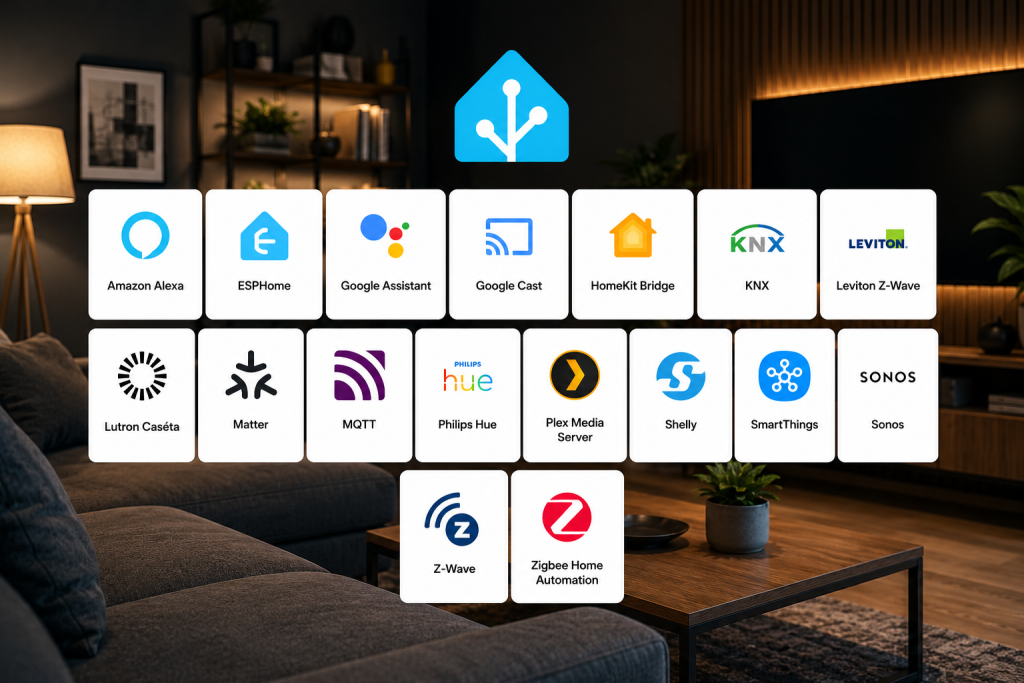
Never met it? The short version: it’s free, open-source software that runs on a little box in your house and becomes the brain of, well, everything. Not “everything from one brand.” Everything. It speaks to a couple thousand different integrations. The Philips bulbs, the off-brand plugs you bought in a weak moment, the thermostat, the doorbell, the TV, the weather station, the garage door opener from a company that went out of business in 2019. Home Assistant will happily herd all of it into one system, and then it hands you an automation engine with essentially no ceiling.
And it does this locally. Your automations run in your house, on your hardware. No monthly fee. No cloud outage taking your lights down. No company quietly deciding that the feature you bought now costs $4.99 a month. When people ask me what the smart home should feel like from a privacy and ownership standpoint, Home Assistant is the honest answer: your house, your data, your rules.
The community is the other superpower. Thousands of people sharing automations, dashboards, and fixes, for free, because they love this stuff. Whatever weird thing you want your house to do, somebody in a forum thread has already done it and posted the config.
This is the closest thing on Earth to the control panel we were all promised in the movies. I want to be crystal clear about that before I tell you why I walked away from the cart.
The Lutron test
Years ago I set up Lutron switches to run my outdoor lights. On at dusk, off at dawn. They adjust themselves as the seasons change, so they keep firing on time in December and in June. I have not touched them since. I don’t think about them, because I don’t have to.
That’s my bar for every piece of technology in this house. Does it recede? Does it do the job and then get out of my life? The stuff I love most is the stuff I forget I own. The iPhone test, the Lutron test, call it what you want: the promise of the smart home was never “spend more time managing your house.” It was spend less.
So the question I had to ask at one in the morning, cart loaded, wasn’t “is Home Assistant capable?” It obviously is. The question was: will this thing disappear into the walls, or will it become a hobby?
And if I’m being honest with myself, and with you, the answer was hobby.
You are now the IT department
Here’s the part of the sales pitch nobody puts on the box, mostly because there is no box.
Home Assistant runs on hardware you provide and maintain. That means you’re standing up a small server in your house. It needs a home, it needs power, it needs updates, and when it goes down, everything it controls goes down with it. You’re also probably adding a USB radio stick or two so it can speak Zigbee and Z-Wave, which is where a lot of its power comes from. None of that is hard for a technical person. All of it is one more thing.
Then there’s the learning curve, and I’ll say this as kindly as I can: it’s real. The community has done heroic work making the interface friendlier, and the newest versions are night-and-day better than the screenshots that scared people off five years ago. But the moment you want the clever stuff, the stuff from the YouTube tours, you’re learning a new vocabulary. Entities, integrations, automations, triggers, conditions, helpers. Some of the best features live in community add-ons that are one layer deeper still, brilliant and slightly unofficial, which means when a monthly update lands, occasionally one of them breaks.
Don’t take my word for it, go read the message boards. You’ll notice two things fast. This might be the most helpful community in all of tech, and the reason they get so much practice is the steady stream of things to troubleshoot. Every thread gets an answer, usually a good one. There are just a lot of threads. That’s not a knock. That’s what a platform still in its tinkering era looks like: a lot of moving pieces, most of which cooperate most of the time.
And that’s the piece that finally decided it for me: the updates. Home Assistant ships new releases constantly, which is a sign of health. It’s also a recurring appointment. Read the release notes, check whether anything you depend on changed, update, and then find out. Most months, nothing. Some months, the kitchen lights stop firing at sunset and you get to go spelunking through logs to find out why. The people who run Home Assistant well treat it a bit like a garden. It rewards regular attention.
And look, I’ve already got a garden. I automated the watering just so I could think about it less.
The single point of failure has a name, and it’s mine
Here’s the beat that matters most in my house. If the lights work because I maintain a server, then the lights work for exactly one person. My wife did not sign up to file a support ticket with her husband because the bathroom motion sensor lost its mind while I’m out of town. My kids need switches that behave like switches, every time, without a status page.
The systems I’ve chosen instead are less capable and more boring, and boring is the feature. When I’m gone for a week, nothing in this house knows or cares.
Not a slam. A fork in the road.
So let me say the quiet part plainly: if tinkering is the hobby, Home Assistant is the best thing going, and it isn’t close. If you light up at the idea of a wall tablet with a live floorplan, if debugging an automation at 11 p.m. sounds like a good Tuesday, go. Run toward it. You’ll join one of the best communities in tech and you’ll build something none of the big ecosystems can touch. I’m not above jealousy, clearly.
But for me the hobby is the result, not the system. I want the seamless house, as close to plug and play as this industry can manage, everything working together without an IT support staff of one keeping it alive. And at this point in my life, with the schedule I’m keeping, the version of me who “will totally stay on top of maintenance” is a fictional character. That’s not Home Assistant’s failure. That’s me knowing my own calendar. Two people can look at the same fork in the road and both choose correctly.
What gets me to yes
Here’s the part I actually find exciting: Home Assistant knows all of this, and it’s coming for the normal-person market anyway.
You can see it happening. There’s now plug-in hardware you can buy that arrives with everything preinstalled, no Raspberry Pi surgery required. The project is run by a foundation with real staying power, not a startup that could vanish and strand you. The interface gets more human every year. Voice control that doesn’t need the cloud went from fantasy to shipping product. Matter support keeps widening the front door. Every release, the gap between “capable” and “effortless” closes a little.
That trajectory matters, because my objection was never the ceiling. It was the floor: how much attention the system demands before it earns its keep. The day Home Assistant is something a normal, busy household can install, forget, and trust for a year at a stretch, it doesn’t just enter our recommendations. It probably goes straight to the top, because nothing else combines that kind of power with local control and zero subscriptions.
And that day is coming. I’m not hedging on this one, I’m 100 percent sure of it. The people building it are too good, and too stubborn, for it not to. When it arrives, I’ll be first in line, and this article gets a very happy follow-up.
Until then, my lights come on at dusk and off at dawn, my sprinklers run themselves, and I couldn’t tell you the last time I thought about either one. That’s the whole dream, and I’m not trading it for a dashboard. Yet.



