Two summers ago I spent ten consecutive mornings standing in my yard at 7 AM with a hose, because the Chicago suburbs had decided rain was optional that month. Somewhere around day eight, holding coffee in one hand and a spray nozzle in the other, I did the math on what my time was worth and started researching irrigation controllers that afternoon.
Here’s what I’ve learned since, including the part the product pages won’t tell you: a useful smart garden needs exactly two things, and maybe a third. Irrigation control. Basic soil monitoring. Optionally some lighting. The industry would love to sell you seventeen sensors, three weather stations, and a robot that names your tomatoes. You don’t need any of it.
The Rachio: Where the Money Actually Goes
The center of my setup is a Rachio controller, bought on a neighbor’s recommendation, wired into the existing underground sprinkler zones. I paid an electrician to handle the wiring. I’m comfortable swapping a light switch, but irrigation controller wiring sits in the category of “pay the person who does this weekly.” Money well spent; he was done in under an hour.
Setup after that took me about an hour: map each zone, tell the app what’s planted where, done. The feature that justifies the whole purchase is weather integration. Rain in the forecast, the system skips watering. No more sprinklers running in a thunderstorm while the neighbors watch, judging.
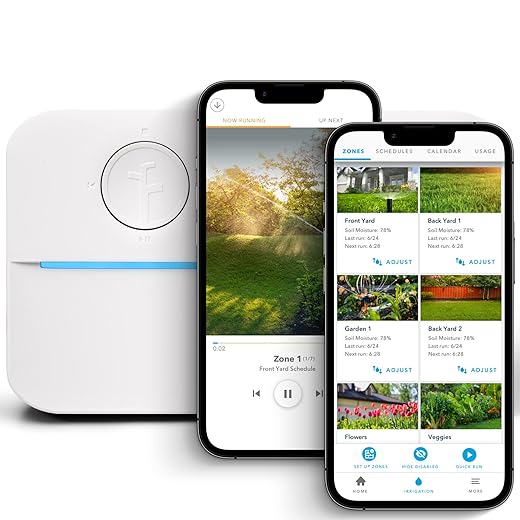
The results were immediate and measurable. The water bill dropped the first full month. Less expected: the plants got noticeably healthier, because consistent moisture beats the feast-or-famine cycle of whenever-I-remembered watering. Turns out plants like routine. Same as kids.
Soil Sensors: Cheap Intelligence
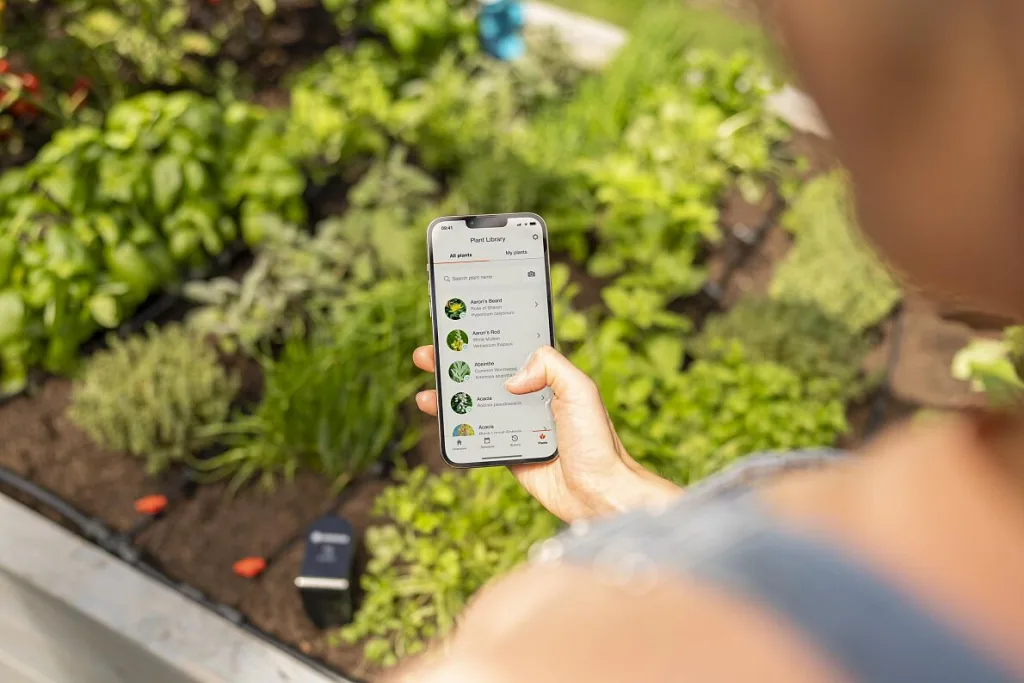
I added a handful of Bluetooth soil moisture sensors, around $100-150 total, and they earned their keep in the first month by telling me something I’d lived next to for years without knowing: my yard has microclimates. The beds near the house hold moisture for days thanks to shade and roof runoff. The back fence line dries out fast in full sun. Same yard, completely different watering needs.
That data turned zone settings from guesswork into actual decisions. The bed by the house waters half as often as the fence line now. Nothing about that required a subscription, a hub, or a weather station the size of a birdfeeder.

RAINPOINT Bluetooth 2-in-1 Soil Moisture & Air Temp Meter, App Remote Monitoring, 20 Plant Database, Compatible with WiFi Hub TWG009 & Water Timer ITV102b
Lighting and Weather: The Optional Tier
I’ve run Philips Hue outdoor lights through multiple Midwest seasons now, from below-zero Januaries to 95-degree Julys, and they’ve held up without complaint. They’re also, honestly, a nice-to-have. Pathway lighting makes the yard pleasant at night; it does not make anything grow. If outdoor lighting is the itch, I covered the whole topic in the smart outdoor lighting guide.
A basic weather station feeds hyperlocal temperature and humidity into the watering decisions, which is useful in a region where the forecast is a rumor. Also optional. The Rachio’s built-in weather data covers most of it.
Start With the Thing That Hurts
The strategy that worked: automate your single biggest pain point first, live with it a season, then expand if you still feel like it. Mine was watering during heat waves. Yours might be the vacation problem, or the vegetable bed that dies every August. One system, proven reliable, beats five systems installed in one ambitious weekend and abandoned by Labor Day.
Integration-wise, I keep it loose. The Rachio app handles its own logic, the sensors report to their app, and HomeKit ties together what it can. I tried fancier coordination through IFTTT early on and found the Rachio’s built-in scheduling made most of it unnecessary. Simple rules survive; clever ones get debugged at 6 AM.
Surviving the Midwest
Buy weather-rated equipment and check the IP ratings, because this climate eats cheap electronics. A bargain sensor that dies in its first winter isn’t a bargain, it’s a subscription with extra steps. The maintenance reality after a full year: I check the apps weekly during the growing season, swap sensor batteries once or twice a year, bring a couple of sensors indoors for winter, and flip the controller to its winter mode in November. That’s the whole job.
The Money Math
My starting setup ran about $400: roughly $250 for the Rachio (it sells closer to $200 these days) and $100-150 in sensors, plus the electrician’s visit. Between the lower water bills and not replacing plants I’d killed through neglect, it paid for itself somewhere in the second season. As upgrades go, it returns better than most things with a touchscreen.
The philosophy underneath all of it: buy hardware for problems you actually have, resist the upgrade treadmill, and pick reliability over features. The goal was never a yard that performs tricks. It was getting my mornings back and keeping the plants alive, and a $400 system handles 90 percent of that without drama.
Frequently Asked Questions
What does it cost to get started?
Plan on $400-500 for a controller and basic sensors. The controller is the must-have; everything else can wait until you have a reason.
Can I install it myself?
The sensors and apps, absolutely. For the controller wiring, hire an electrician unless you genuinely know your way around irrigation systems. It’s an hour of labor protecting a few hundred dollars of hardware.
Will the equipment survive bad weather?
Quality gear with proper IP weather ratings handles Midwest extremes fine. My system has been through ice storms and heat waves. The cheap stuff is where the horror stories come from.
Does it actually save money?
Yes, in two ways: lower water usage from weather-aware scheduling, and fewer dead plants to replace. Most setups pay for themselves in one to two seasons.
How much attention does it need?
Weekly app check-ins during the season and battery swaps once or twice a year. If a smart garden demands daily attention, something is configured wrong.



