I have seventeen rooms in my house if you count generously, which I do because it makes the mortgage feel slightly more justified. About three years ago I decided I wanted music in all of them. Not background noise from a phone speaker balanced on a toilet tank. Real, actual, fill-the-room sound that follows you from the kitchen to the basement like a loyal dog who happens to know every Steely Dan deep cut.
That decision cost me more money, time, and marital goodwill than I’d like to admit.
But I learned a hell of a lot in the process. This guide covers the best smart speakers for whole home audio in 2026, tested and evaluated by someone who has actually lived with these things scattered across a 1920s house in the western suburbs of Chicago. I’ll tell you what sounds great, what connects without making you want to throw it through a window, and what’s actually worth your money when the goal is music everywhere, all the time.
Table of Contents
- The Whole Home Audio Philosophy (Or: Why One Speaker Will Never Be Enough)
- What Actually Matters When You’re Buying for Every Room
- The 2026 Lineup: Eight Speakers That Earned Their Place
- The Big Comparison Table of Reckoning
- Choosing Your Poison: Alexa vs. Google vs. Apple vs. Sonos
- Hard-Won Wisdom From a Man Who’s Rebooted Too Many Routers
- Frequently Asked Questions
- Final Verdict: Build It Room by Room
The Whole Home Audio Philosophy (Or: Why One Speaker Will Never Be Enough)
Here’s the pitch the smart home industrial complex wants to sell you: buy one $400 speaker, put it in your living room, and you’ve “upgraded your audio experience.” That’s like buying one really nice tire and calling your car upgraded. Whole home audio means the music is where you are, not where you were five minutes ago.
The real magic happens when you’re cooking dinner with jazz in the kitchen, your teenager has lo-fi beats in their room (allegedly studying), and you can group everything together for a party that makes your 2,400 square feet sound like a venue. That requires multiple speakers working together, grouped intelligently, streaming from one source without latency that makes it sound like a bad echo in a parking garage. And when you’re ready to tackle the rest of the house, our whole-house smart lighting guide is a solid next step.
It also requires spending money. But not as much as the industry wants you to think.
The best smart speakers for whole home audio in 2026 share a few traits: reliable multi-room grouping, solid Wi-Fi connectivity, decent sound for their size, and the ability to work together without requiring a PhD in network engineering. Let’s talk about what to look for before we get to the specific picks.
What Actually Matters When You’re Buying for Every Room
Sound Quality Per Dollar, Not Just Sound Quality
When you’re buying one speaker, you can splurge. When you’re buying six, the math changes violently. A speaker that sounds 80% as good as the flagship at 40% of the price is your best friend in a whole home setup. You want every room to sound good. You don’t need every room to sound like a recording studio, unless you’re running a recording studio, in which case you probably aren’t reading this article.
Multi-Room Grouping That Actually Works
This is the whole ballgame. If you can’t group speakers reliably, instantly, and without one of them dropping out mid-song like a narcoleptic drummer, nothing else matters. In my experience, Sonos handles this best. Apple’s AirPlay 2 is solid if you’re all-in on Apple. Amazon and Google have improved significantly but still occasionally hiccup in ways that make me question reality.
Wi-Fi Stability
Smart speakers are only as good as your Wi-Fi. Period. If you’ve got a single router from 2019 trying to serve an entire house, you’re going to have a bad time no matter what speakers you buy. A mesh network is essentially a prerequisite for whole home audio in 2026. I run an Eero Pro 6E setup across three floors and it changed everything. Before that, my kitchen speaker would drop off the network every time someone in the living room started a video call.
Voice Assistant vs. Sound Quality
Some speakers are built voice-first with mediocre audio. Others are built audio-first with a voice assistant bolted on. For whole home audio, you want the latter. A speaker you’re going to listen to music through for hours needs to sound like it was designed by someone who has heard music before.
The 2026 Lineup: Eight Speakers That Earned Their Place
I’ve tested, lived with, cursed at, and occasionally praised every speaker on this list. Some are in my house right now. Some were in my house and got returned. The ones below survived the gauntlet.
1. Sonos Era 300 — Best Overall for Whole Home Audio
The Sonos Era 300 is the speaker I’d recommend if someone put a gun to my head and said “pick one.” The spatial audio is genuinely impressive, not a gimmick, and it fills a room with the kind of three-dimensional sound that makes you look around like the band might actually be hiding behind your couch. It supports Dolby Atmos Music, which in 2026 is finally getting the library it deserves.
Sonos multi-room grouping remains the gold standard. The app had its dark period in 2024, and I will never fully forgive them for that, but the current version is stable and functional. The Era 300 works with AirPlay 2, Spotify Connect, Amazon Alexa (built in or via voice assistant swap), and pretty much every streaming service that matters. It doesn’t have Google Assistant, which is worth noting if you’re a Google household.
✅ Best for: Living rooms, dens, and any primary listening space where sound quality is the top priority.
⚠️ Keep in mind: At this price, you probably can’t put one in every room. Use it for anchor rooms and pair with cheaper speakers elsewhere.
💰 Price range: $399–$449
2. Sonos Era 100 — Best Mid-Range Workhorse
The Era 100 is the speaker that makes whole home Sonos actually affordable. It sounds significantly better than it has any right to at this price point. The stereo imaging from a single compact speaker is impressive enough that I stopped noticing it was a “small” speaker about ten minutes after setting it up in my kitchen. Clean mids, surprising bass for the size, and none of the tinny harshness that plagues cheap smart speakers.
It shares the same Sonos app and grouping capabilities as its bigger sibling, which means it slots right into a multi-room setup with zero friction. Bluetooth, AirPlay 2, line-in via USB-C adapter. My strategy: Era 300s in the living room and office, Era 100s in the kitchen, bedrooms, and bathroom. That’s how you build a whole home system without filing for bankruptcy.
✅ Best for: Kitchens, bedrooms, bathrooms, and anywhere you want quality sound without the flagship price.
⚠️ Keep in mind: No Dolby Atmos support. For spatial audio, you need the Era 300.

💰 Price range: $199–$249
3. Apple HomePod (2nd Generation) — Best for Apple Households
If your family bleeds Apple, if every pocket contains an iPhone and every backpack holds an iPad, the HomePod is a devastatingly good smart speaker. The computational audio tuning is real and it works. The speaker literally listens to itself in the room and adjusts. I set one up in my dining room with its old plaster walls and weird acoustics, and the thing figured out the space faster than I’d figured out the mortgage payment schedule.
Multi-room via AirPlay 2 is excellent between HomePods. You can create stereo pairs and home theater setups with Apple TV. Siri is still Siri, meaning it’s fine for basics and frustrating for anything complex, but for “play this album everywhere” it gets the job done. The sound is warm, full, and room-filling in a way that belies the speaker’s modest footprint. Thread and Matter support round it out for smart home control.
✅ Best for: Apple-devoted households who use Apple Music and want tight integration with iPhones, iPads, and Apple TV.
⚠️ Keep in mind: If you use Spotify as your primary service, the experience is notably worse since there’s no native Spotify Connect. You’ll be AirPlaying from your phone like it’s 2018.

💰 Price range: $279–$299
4. Amazon Echo Studio (2025 Refresh) — Best Alexa Speaker for Audio Quality
Amazon finally made an Echo that audiophiles don’t have to be embarrassed about. The 2025 Echo Studio refresh brought improved drivers, better spatial audio processing, and a low-frequency punch that genuinely surprised me. It’s not quite Sonos Era 300 territory, but for $50 to $100 less, it gets remarkably close. The bass in particular is the best I’ve heard from any voice-first speaker. It’s physical. You feel it in your ribs during a good bass line.
Where it really shines for whole home audio is the price-to-coverage ratio. You can afford to put Echo Studios in your primary rooms and scatter Echo Pops in the secondary spaces, all grouped through the Alexa app with one tap. Multi-room grouping has gotten significantly more reliable in 2026. It’s not Sonos-level consistent, but it’s close enough that I stopped noticing the gaps. Amazon Music Unlimited with spatial audio and lossless is a strong streaming option, and Spotify Connect works natively.
✅ Best for: Alexa households who want premium sound without Sonos pricing.
⚠️ Keep in mind: Amazon’s software still occasionally pushes suggestions and ads through Alexa. It’s manageable but annoying. You will be told about Amazon deals you didn’t ask about.

💰 Price range: $299–$349
5. Google Nest Audio — Best Google Speaker for the Money
The Nest Audio doesn’t look like much. It’s a fabric-covered rectangle that could pass for a tissue box cover designed by a minimalist. But damn, it sounds good for what it costs. Google tuned this thing with a focus on mid-range clarity and vocal presence that makes podcasts, audiobooks, and acoustic music sound fantastic. It’s the speaker I have in my bedroom and it’s the one I reach for when I want to fall asleep to something that sounds warm rather than harsh.
Google’s multi-room grouping through the Home app has matured considerably. Speaker groups are easy to create, casting from any Android phone or Chromebook is trivially simple, and Chromecast built-in means native support from most major streaming apps. You can pair two for stereo. YouTube Music integration is the best of any platform, obviously. For a Google-centric household, filling every room with these is an absurdly cost-effective way to get whole home audio.
✅ Best for: Google/Android households on a budget who want quality sound in multiple rooms.
⚠️ Keep in mind: Bass is limited compared to the Echo Studio or Sonos Era 100. Great for vocals and mid-focused music, less convincing for hip-hop or EDM.

💰 Price range: $59–$89
6. Amazon Echo Pop — Best Budget Pick for Filling Every Room
Let me be honest. The Echo Pop does not sound amazing. It sounds fine. It sounds like a $30 speaker that has been asked to fill a room and is doing its sincere best. But here’s the thing about whole home audio: sometimes “fine” in every room beats “incredible” in one room. I have two Echo Pops in rooms where I’m never sitting down and critically listening. The laundry room. The garage. The hallway where my teenagers shout questions at Alexa about the weather instead of looking out a goddamn window.
For those spaces, the Echo Pop is perfect. It joins Alexa groups instantly, responds to voice commands, streams from every major service, and costs so little that buying five of them feels like a rounding error compared to a single premium speaker. Use these as your supporting cast and put the real speakers in the rooms that matter.
✅ Best for: Utility rooms, hallways, bathrooms, and secondary spaces where presence matters more than audiophile quality.
⚠️ Keep in mind: Genuinely weak bass and limited volume. This is a “background music and voice commands” speaker, not a “sit down and listen to an album” speaker.

💰 Price range: $25–$40
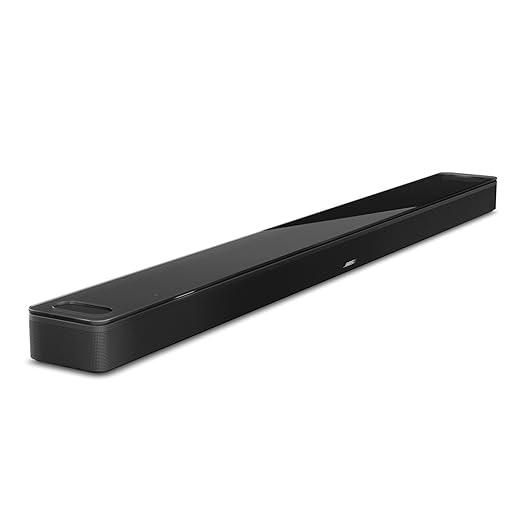
7. Sonos Move 2 — Best Portable Option for Indoor/Outdoor Flexibility
The Move 2 solves a problem I didn’t know I had until a summer evening when I wanted to take the music from the kitchen out to the back patio without losing the multi-room group. It’s a full Sonos speaker on Wi-Fi when it’s inside and on its charging base, and a Bluetooth portable when you grab it and walk outside. The automatic switching is slick. The battery lasts about 24 hours, which means I charge it maybe twice a week during summer.
Sound quality is between the Era 100 and Era 300. Excellent stereo sound, automatic Trueplay tuning that adjusts as you move it to different rooms, and the same Sonos grouping you get from the stationary speakers. It’s the most versatile speaker on this list. The catch is the price, which is steep for something you might also accidentally leave in the rain. But if your whole home includes a patio, a deck, or a garage where you work on projects, the Move 2 earns its keep.
✅ Best for: Homeowners who want to extend their audio setup to patios, garages, and outdoor spaces.
⚠️ Keep in mind: Heavy for a portable (about 6.6 lbs). This isn’t a hiking speaker. It’s a “carry it from one room to another” speaker.

💰 Price range: $399–$449
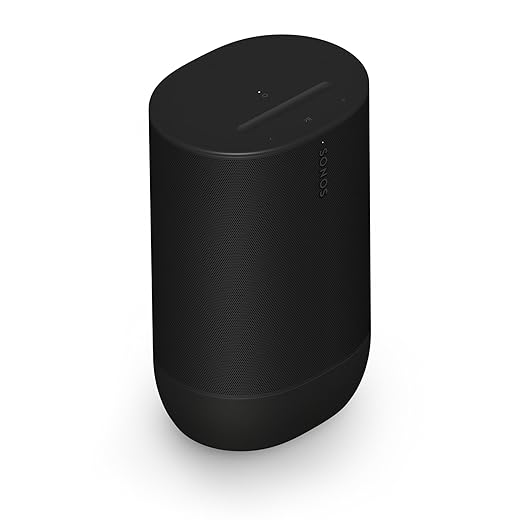
8. Bose Smart Ultra Soundbar — Best for the Living Room Anchor
I know. A soundbar in a smart speaker article. But hear me out, because this is how my whole home system actually works: the Bose Smart Ultra Soundbar anchors the living room, handling TV audio, movies, and music. It supports AirPlay 2, Spotify Connect, Chromecast, and Alexa built-in. That means it groups with Alexa speaker groups and responds to AirPlay 2 multi-room commands from Apple devices. It’s a bridge between worlds.
The sound quality is, predictably, the best on this list. It’s a soundbar. It has more drivers and more room than any bookshelf smart speaker. Dolby Atmos support makes movies sound obscenely good without a full surround setup. As the living room anchor of a whole home audio system, it pulls double duty in a way that justifies the investment. You were going to want a soundbar anyway. Getting one that also joins your multi-room audio groups is just efficient thinking.
✅ Best for: Living rooms and home theaters where the speaker needs to serve double duty for music and TV/movies.
⚠️ Keep in mind: It’s a soundbar, not a standalone speaker. It needs a TV or entertainment center to live in front of. And at this price, it’s an investment, not an impulse buy.
💰 Price range: $799–$899
The Big Comparison Table of Reckoning
Numbers. Facts. The cold, hard truth laid out in rows and columns so you can compare without scrolling back up seventeen times.
| Speaker | Best For | Price Range | Voice Assistant | Multi-Room Protocol | Sound Rating |
|---|---|---|---|---|---|
| 🏆 Sonos Era 300 | Overall Best | $399–$449 | Alexa / Sonos Voice | Sonos, AirPlay 2 | ★★★★★ |
| Sonos Era 100 | Mid-Range Workhorse | $199–$249 | Alexa / Sonos Voice | Sonos, AirPlay 2 | ★★★★☆ |
| Apple HomePod (2nd Gen) | Apple Households | $279–$299 | Siri | AirPlay 2 | ★★★★½ |
| Amazon Echo Studio (2025) | Best Alexa Sound | $179–$199 | Alexa | Alexa Groups | ★★★★☆ |
| Google Nest Audio | Google on a Budget | $59–$89 | Google Assistant | Chromecast, Google Groups | ★★★½☆ |
| Amazon Echo Pop | Budget Room Filler | $25–$40 | Alexa | Alexa Groups | ★★½☆☆ |
| Sonos Move 2 | Portable / Outdoor | $399–$449 | Alexa / Sonos Voice | Sonos, AirPlay 2, BT | ★★★★½ |
| Bose Smart Ultra Soundbar | Living Room Anchor | $799–$899 | Alexa | AirPlay 2, Chromecast, BT | ★★★★★ |
Choosing Your Poison: Alexa vs. Google vs. Apple vs. Sonos
Let’s talk about the decision that will shape your entire setup, the one nobody tells you about until you’re three speakers deep and realize you picked wrong.
The Sonos Path
Best multi-room audio. Period. The grouping is reliable, the sound quality across the lineup is consistent, and it works with almost every streaming service and voice platform. The downsides: it’s the most expensive path, and Sonos has developed a nasty habit of discontinuing support for older hardware. They want you on the upgrade treadmill, and the prices make that treadmill hurt. But if audio quality and reliable multi-room grouping are your top priorities, this is still the answer in 2026.
The Amazon Alexa Path
Most affordable way to fill a house. The Echo lineup covers every price point from “impulse buy” to “considered purchase.” Alexa integration is deep, smart home device compatibility is the widest of any platform, and multi-room grouping works well enough. The tradeoff is that you’re living in Amazon’s world, and Amazon’s world includes occasional product suggestions, data collection that would make a Cold War spy blush, and an app that prioritizes selling you things over helping you use things. The sound quality at the high end (Echo Studio) is genuinely competitive.
The Google Path
The middle ground. Google’s speakers sound good for their price, casting is effortless from Android, and Google Assistant remains the smartest voice assistant for answering questions. The speaker lineup is thinner than Amazon’s, and Google has an unsettling history of abandoning hardware products. Remember the Google Home Max? Exactly. But the Nest Audio is a killer value and if you’re already deep in Google services, the integration is natural. We cover the full picture in Google Home Alternatives: Where to Go After the Gemini Disaster.
The Apple Path
The locked garden. If you and your family are all-Apple, the HomePod experience is polished and the audio quality is outstanding. But Apple makes it genuinely difficult to use non-Apple services. The Spotify situation alone has driven people away. And with only two models (HomePod and HomePod Mini), the lineup is limited compared to the competition. You’re paying Apple prices for Apple quality with Apple restrictions. You know exactly what you’re signing up for. For a deeper dive, check out our HomeKit Buyer’s Guide.
Hard-Won Wisdom From a Man Who’s Rebooted Too Many Routers
Invest in Your Wi-Fi First
I cannot stress this enough. I spent two months blaming my Sonos speakers for audio dropouts before I realized my ancient Netgear router was the bottleneck. Upgraded to a mesh system and every single problem vanished overnight. Like EKG readouts from some electronic heart monitor suddenly going from erratic to smooth. If you’re going to put eight or more smart devices on your network (and whole home audio will do that easily), you need a mesh network with dedicated backhaul. Budget $200 to $400 for the network before you budget for speakers. Same goes for smart thermostats and every other connected device in your house.
Use 5GHz When Possible
Most modern smart speakers support 5GHz Wi-Fi. Use it. The 2.4GHz band in any suburban neighborhood is like a crowded highway during rush hour. Every baby monitor, garage door opener, and neighbor’s aging router is fighting for the same spectrum. 5GHz has more room and less interference. Shorter range, yes, but that’s what mesh nodes are for.
Group Strategically
Create groups that match how you actually live. I have a “Downstairs” group (kitchen, living room, dining room) for when we’re all together, a “Whole House” group for parties, and individual rooms for bedtimes and focused listening. Don’t just dump everything in one group. You’ll go insane when your morning alarm podcast starts blasting from every room simultaneously. Trust me on this one. I learned it the hard way at 6:15 AM on a Saturday. Pairing speakers with smart home sensors can trigger audio announcements automatically.
Start With the Rooms That Matter
Kitchen and living room first. Always. Those are the rooms where you spend the most waking hours and where music makes the biggest quality-of-life difference. Then bedrooms. Then bathrooms. Then the rooms where you’re just passing through. Building out a whole home system over six months is smarter than buying everything at once and having a stack of boxes that look like casualties of a domestic campaign gone wrong.
Frequently Asked Questions
Q: Can I mix different smart speaker brands for whole home audio?
A: Technically yes, but it gets messy. Mixing brands means you’ll need a third-party workaround like AirPlay 2 or Bluetooth to group them. For the cleanest multi-room experience, stick to one platform or use Sonos, which plays nicely with almost everything. I’ve tried running mixed setups and inevitably one speaker becomes the problem child that won’t stay in the group.
Q: How many smart speakers do I need for whole home audio?
A: It depends on your house size and layout, but most homes do well with 4 to 8 speakers. Start with the rooms you spend the most time in, like the kitchen, living room, and bedroom, then expand. My roughly 2,400 square foot Chicago suburb house uses seven speakers across three floors and that covers everything I need.
Q: Is Sonos still worth it in 2026?
A: Yes, but with caveats. The hardware is excellent and the multi-room grouping is still the gold standard. The app had serious problems in 2024 but has improved significantly. If audio quality and brand-agnostic streaming matter to you, Sonos remains the best option for whole home audio. Just be aware of their track record with older device support.
Q: Do smart speakers work without Wi-Fi?
A: Most smart speakers need Wi-Fi for streaming, voice commands, and multi-room grouping. Some offer Bluetooth as a fallback so you can play audio from your phone directly, but you lose the whole home functionality. Wi-Fi is essentially required for any serious multi-room setup.
Q: What is the best budget smart speaker for multi-room audio in 2026?
A: The Amazon Echo Pop is the best budget option at around $25 to $40. The sound quality is modest, but you can scatter several of them throughout your house for the price of one premium speaker. For a step up in audio quality without breaking the bank, the Google Nest Audio at around $60 to $89 is the sweet spot.
Final Verdict: Build It Room by Room
Whole home audio in 2026 is more accessible than it’s ever been. You can build a system that covers every room in your house for under $1,000 if you’re strategic about it. Or you can go full Sonos and spend more, knowing you’re getting the most reliable multi-room experience money can buy. There’s no single right answer. There’s only the answer that fits your house, your family, your budget, and the voice assistant you’ve already committed to.
If I were starting from scratch today, I’d anchor the living room with a Sonos Era 300, fill the kitchen and bedrooms with Era 100s, and grab an Echo Pop for the garage where sound quality matters less than just having something to listen to while I pretend to organize tools. That’s the honest recommendation from someone who has tried nearly every combination and lived with the consequences.
The best smart speakers for whole home audio aren’t always the most expensive ones. They’re the ones that work together, sound good enough for their designated room, and don’t make you want to throw them out a window when something inevitably needs troubleshooting at 11pm on a Tuesday.
Check current prices using the product links above. Amazon pricing changes frequently and deals appear often, especially during Prime Day and holiday sales when you can sometimes snag two speakers for the price of one. That’s how you build a whole home system without your spouse finding out the real total.
Good luck out there. Your house is about to sound a lot better.



