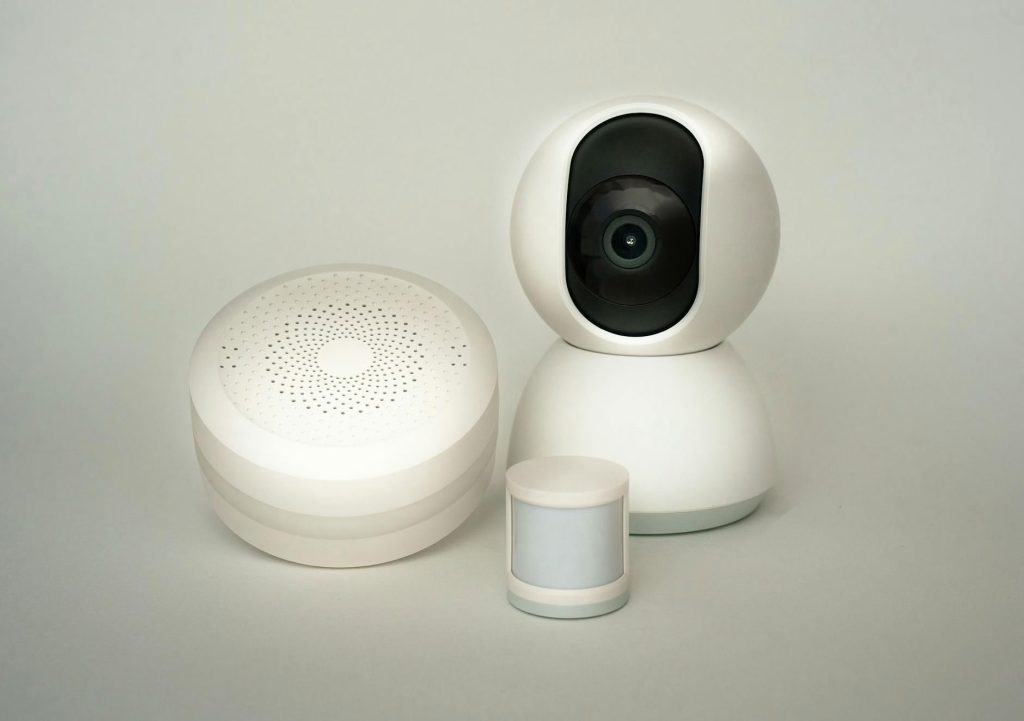
Here is something nobody in the smart home industry wants to admit: the sensors are the actual brains of your operation. Not the $300 voice assistant. Not the fancy touchscreen panel. The sensors. Those little plastic rectangles stuck to your door frames and tucked behind your water heater are what make automation actually automatic instead of just “clap your hands and the lights do something.”
I learned this the hard way. Spent two years buying smart bulbs and smart plugs, feeling very futuristic, and then realized I was still manually triggering everything from my phone like some kind of 21st century light switch operator. The moment I stuck a $15 motion sensor in my hallway, everything changed. The house started thinking for itself.
So here is what you get in this guide: the best smart home sensors for home automation in 2026, organized by what they actually detect. Motion, doors, water leaks, temperature, presence, the works. Real recommendations from real testing in a real 1900s suburban Chicago house that fights me on every upgrade.
Table of Contents
- Why Sensors Are the Skeleton Key to Actual Automation
- The Protocol Mess: Zigbee, Thread, Matter, Wi-Fi, and Why It Matters
- The Motion Sensor Wars of 2026
- Door and Window Sensors: Tiny Guardians of the Threshold
- Leak Sensors, or How I Avoided a $12,000 Basement Renovation
- Temperature and Humidity: The Silent Data Collectors
- Presence Sensors: The Mind Readers
- The Big Comparison Table
- Frequently Asked Questions
- Final Verdict: Build the Sensor Network, Then Build Everything Else
Why Sensors Are the Skeleton Key to Actual Automation
Think of your smart home without sensors and you have got a collection of remote-controlled appliances. Fancy, sure. But the phone in your pocket becomes a glorified remote control, and you are still the one making every decision. Turn on the porch light. Lock the door. Check if the basement is flooding. You are the automation.
Sensors flip that equation.
A motion sensor in the hallway means the lights come on when you stumble to the bathroom at 2am and turn off when you leave. A door sensor means the thermostat adjusts when you open the back door on a January morning because your teenager apparently believes heated air is free. A leak sensor means you find out about the water heater’s slow death before it turns your basement into an indoor pool.
The best smart home sensors for home automation do one thing exceptionally well: they give your system context. They tell your hub what is happening in the physical world so it can react without you lifting a finger. That is not convenience. That is the entire point.
The Protocol Mess: Zigbee, Thread, Matter, Wi-Fi, and Why It Matters
Before we get to specific products, we need to talk about the invisible infrastructure that makes sensors work. This is the part most “best of” lists skip, and it is the part that determines whether your sensors are still functioning two years from now or sitting in a junk drawer like casualties of a domestic campaign gone wrong.
Zigbee: The Reliable Workhorse
Zigbee sensors have been the backbone of serious home automation for years, and in 2026 they remain excellent. Low power consumption means a CR2032 coin cell lasts a year or two. They create mesh networks, so more devices means better coverage. Requires a hub (SmartThings, Hubitat, or a Zigbee coordinator with Home Assistant). If you are already invested in any of those platforms, Zigbee sensors are the no-brainer choice.
Thread and Matter: The New Regime
Matter over Thread is the industry’s attempt to make everything work with everything. In practice, it is getting there. Thread sensors are fast, low-power, and mesh-capable. Apple Home, Google Home, and SmartThings all support them natively. The selection of Matter sensors has exploded in 2025 and 2026, and prices have come down to near Zigbee levels. If you are starting fresh, Thread/Matter is the way forward.
Wi-Fi: The Tempting Trap
Wi-Fi sensors need no hub. Plug and play. Sounds great. But they eat batteries like my teenagers eat groceries, they clog your router with connections, and they tend to be the first things that go offline when your network hiccups. There are a few exceptions worth buying (I will note them), but as a general rule, avoid Wi-Fi for battery-powered sensors.
Bluetooth: The Short-Range Specialist
Useful for temperature and humidity sensors that do not need instant response times. Terrible for motion or door sensors where speed matters. Bluetooth sensors are cheap, but you get what you pay for in range and reliability.
The Motion Sensor Wars of 2026
Motion sensors are where most people start, and for good reason. The automation possibilities are enormous. Lights that follow you through the house. Cameras that only record when something moves. Thermostats that know which rooms are occupied. A good motion sensor is a force multiplier for every other smart device you own.
1. Aqara Motion Sensor P2 — Best Overall Motion Sensor
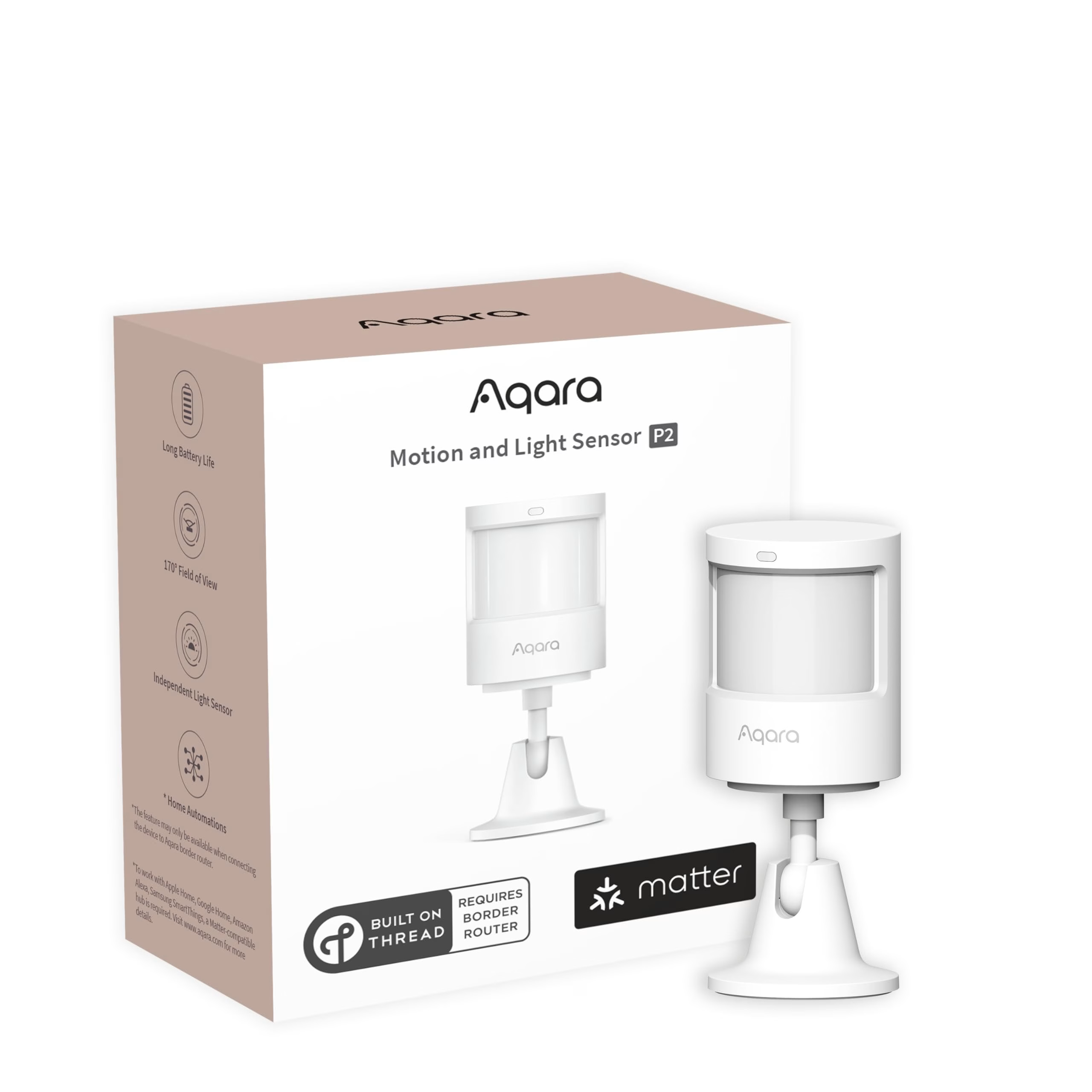
The Aqara P2 runs on Thread, which means it works natively with Apple Home, Google Home, SmartThings, and Home Assistant without needing an Aqara hub. The detection is fast, the range is solid at about 16 feet with a 170-degree field of view, and it includes a built-in light sensor so your automations can differentiate between daytime and nighttime triggers.
What sets this apart from the older Aqara motion sensors is the elimination of the hub requirement for most setups. Thread support means it meshes with other Thread devices in your home, improving network reliability the more sensors you add. Battery life runs about 18 to 24 months on a single CR2450. I have had two of these running since late 2025 and have not replaced a battery yet.
✅ Best for: Homeowners building a Matter-based smart home or anyone who wants fast, reliable motion detection without hub headaches.
⚠️ Keep in mind: The minimum re-trigger time is about 10 seconds. Not ideal if you need instant re-detection for very fast-moving scenarios.
💰 Price range: $25–$35

2. Sonoff SNZB-06P — Best Budget Presence Sensor (Motion Alternative)
Okay, this technically blurs the line between motion sensor and presence sensor, but for $16, I do not care about taxonomy. The SNZB-06P uses 5.8GHz mmWave radar, which means it detects presence, not just movement. Sitting still on the couch? It sees you. Reading a book without moving? Still knows you are there. This solves the most infuriating problem with PIR motion sensors: the lights turning off while you are still in the room.
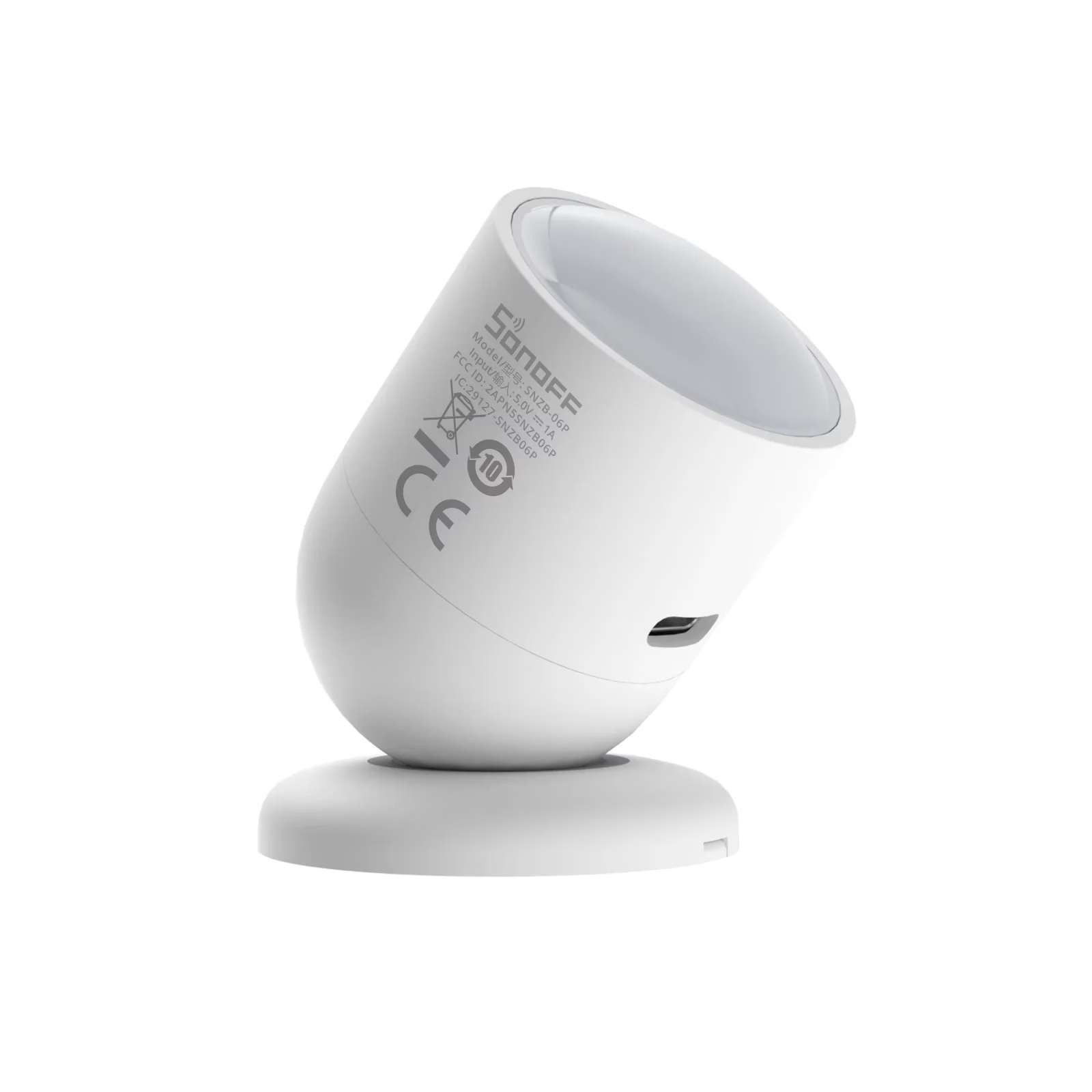
It runs on Zigbee 3.0, so you will need a compatible hub. The detection range is adjustable up to about 13 feet. Because it uses radar instead of infrared, it works regardless of temperature, which is a real advantage in garages and sunrooms where PIR sensors get confused by heat fluctuations. The catch: it needs constant USB power, so no battery operation.
✅ Best for: Rooms where you sit still for long periods, like offices, living rooms, and bathrooms.
⚠️ Keep in mind: Requires USB power. No battery option. Also requires a Zigbee hub.
💰 Price range: $14–$20

Door and Window Sensors: Tiny Guardians of the Threshold
A door sensor is the simplest, most useful piece of smart home hardware in existence. Two pieces. A magnet and a reed switch. When they separate, something happens. That is it. No firmware updates, no AI, no subscription. Just magnets and consequences.
I have these on every exterior door, the garage side door, and the basement door. When the front door opens after 11pm, every light on the first floor turns on. When the back door opens in winter, the thermostat pauses so I am not literally heating the neighborhood. Simple automations, enormous impact.
3. Eve Door and Window Sensor — Best Matter/Thread Door Sensor
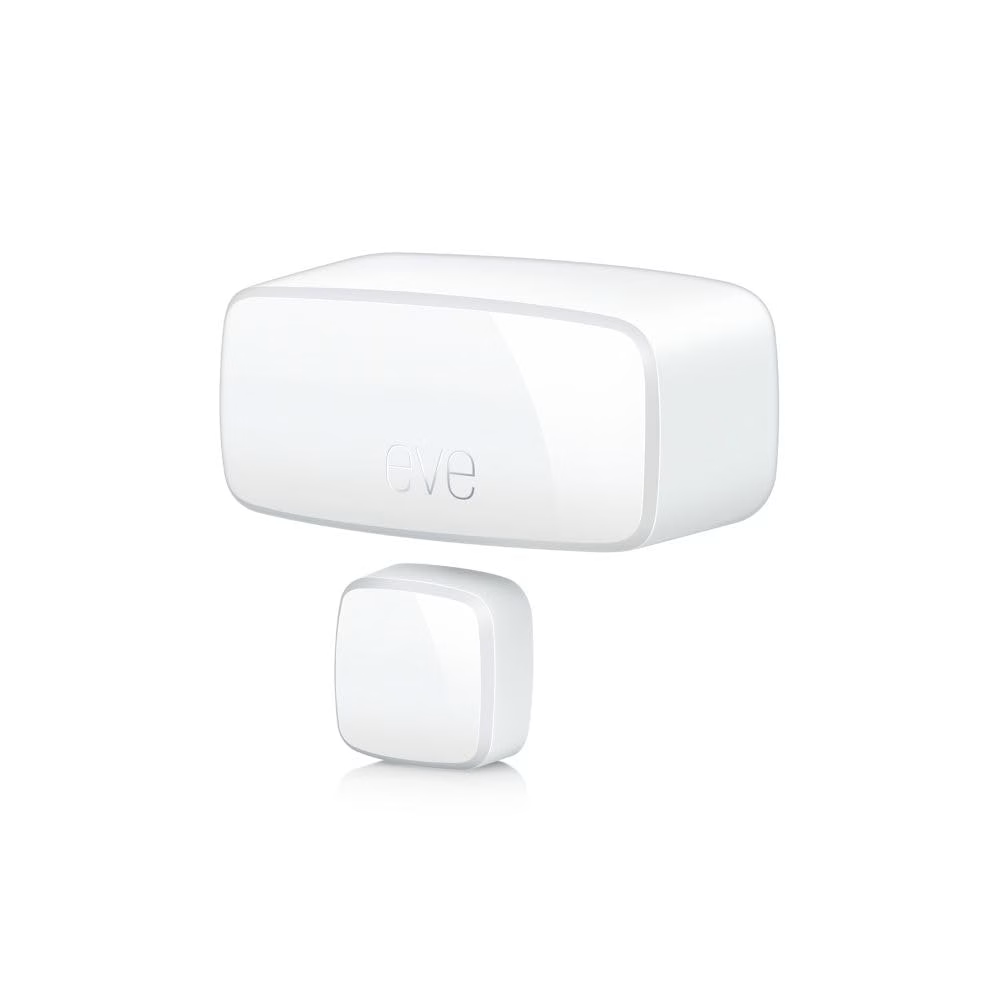
Eve has been the quiet overachiever of the smart sensor world for years now. The Eve Door and Window sensor runs on Thread with full Matter support, which means it works with Apple Home, Google Home, SmartThings, and Amazon Alexa without any Eve-specific hub. The sensor itself is compact, well-built, and uses a replaceable CR2032 battery that lasts about a year and a half.
The response time is virtually instant over Thread. Door opens, automation fires. No perceptible delay. Eve’s own app offers additional features like usage history and statistics, but the core functionality works entirely through your Matter controller. No cloud dependency. No account required. That is increasingly rare and genuinely appreciated.
✅ Best for: Apple Home users and anyone building a hub-free Matter smart home.
⚠️ Keep in mind: Slightly pricier than Zigbee alternatives. You need a Thread border router (HomePod Mini, Nest Hub, etc.) for it to function.
💰 Price range: $30–$40

4. SmartThings Multipurpose Sensor — Best Feature-Packed Door Sensor
The SmartThings Multipurpose Sensor does more than just tell you a door is open. It also measures temperature, detects vibration, and tracks orientation. That means one sensor can tell you the door opened, someone knocked on it, it is 38 degrees in the garage, and the door is currently at a 45-degree angle. That is an absurd amount of data for one little white rectangle.
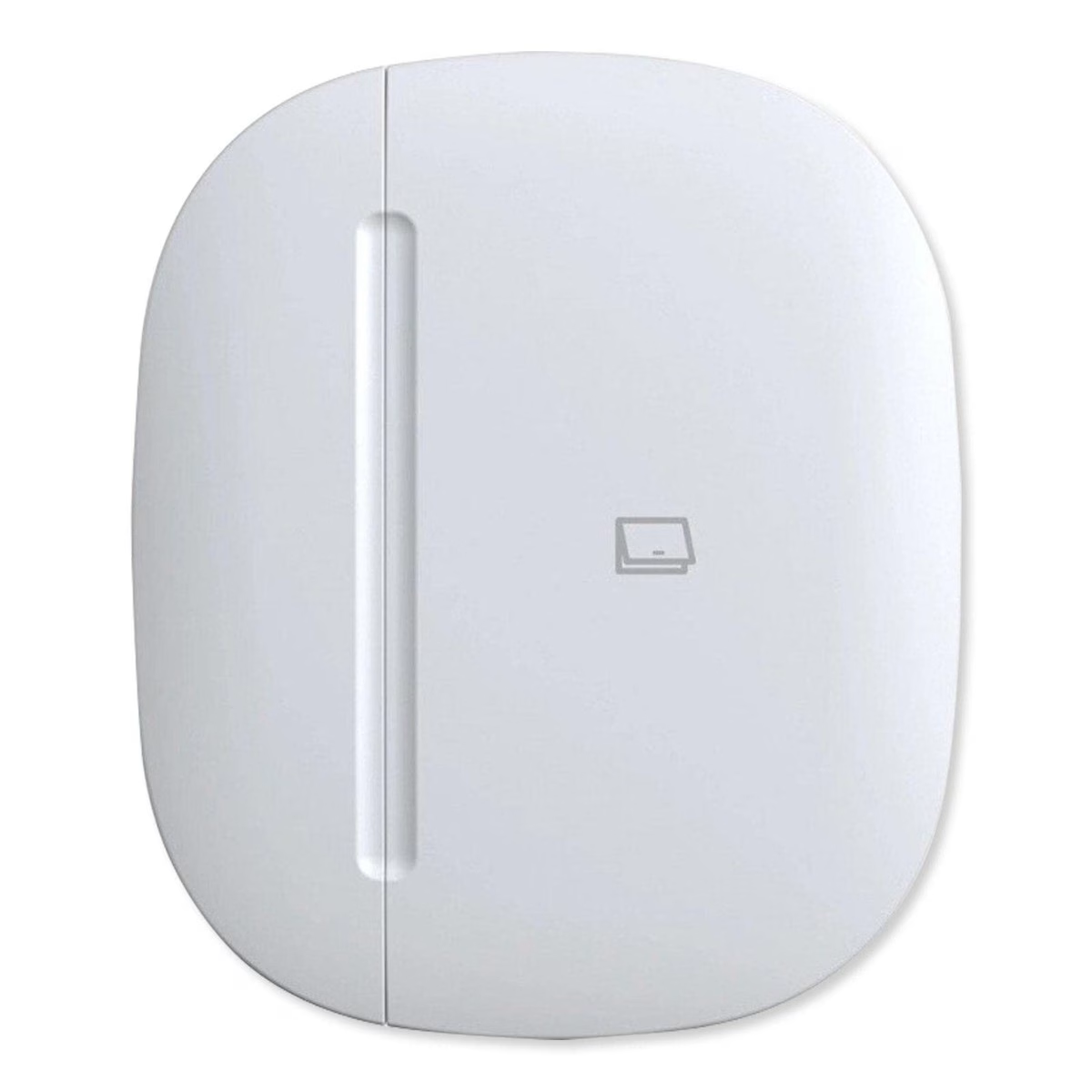
It runs on Zigbee and requires a SmartThings hub (or any compatible Zigbee coordinator). The vibration detection is genuinely useful for things like knowing when the dryer finishes or if someone is tampering with a window. Battery life is excellent, typically 18 months or more. Samsung has kept this product alive and updated, which is more than you can say for half the smart home graveyard out there.
✅ Best for: SmartThings and Hubitat users who want maximum data from every sensor.
⚠️ Keep in mind: Requires a Zigbee hub. The sensor is a bit bulkier than dedicated door sensors.
💰 Price range: $22–$30

Leak Sensors, or How I Avoided a $12,000 Basement Renovation
Let me tell you a story. January 2024. My water heater, which was older than both my children, decided to start weeping from its base at 3am. The leak sensor I had placed on the floor behind it six months earlier sent a notification to my phone, triggered a smart valve shutoff, and turned on the basement lights. I woke up, walked downstairs, saw a puddle the size of a dinner plate, and dealt with it before it became a puddle the size of my basement.
That sensor cost me $14. The basement renovation it prevented? I got quotes. $8,000 to $12,000.
If you buy only one type of sensor from this entire article, buy a goddamn leak sensor.
5. Aqara Water Leak Sensor T1 — Best Zigbee Leak Sensor
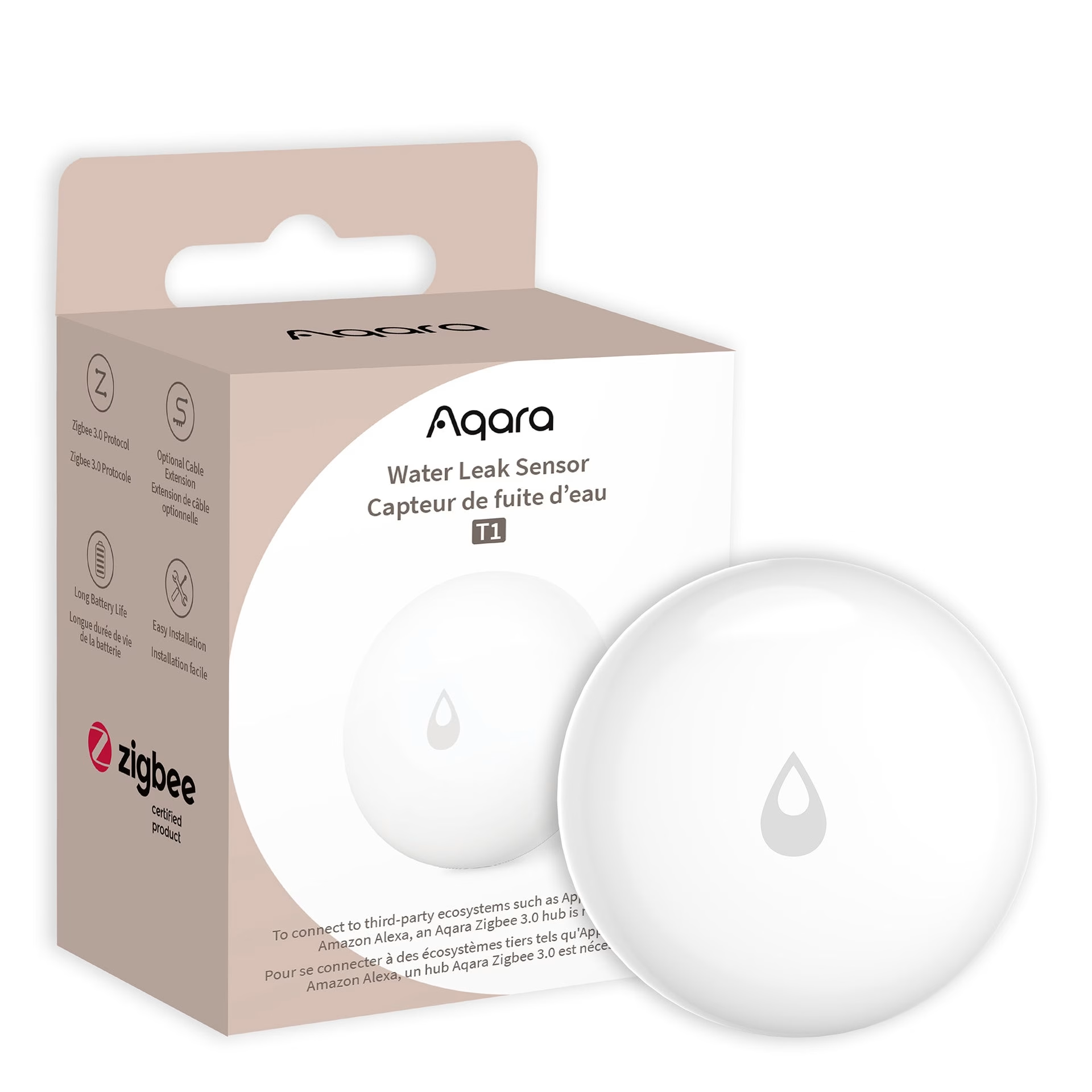
Small, flat, and designed to sit directly on the floor where water would collect first. The Aqara T1 has two contact probes on the bottom that trigger the instant they touch water. It connects via Zigbee 3.0, which means fast alerts through your hub to your phone, your smart speakers, and any automations you have configured. The built-in buzzer is loud enough to wake you up if your phone is on silent.
I have four of these scattered across my house. Under the kitchen sink, behind the washing machine, next to the water heater, and near the sump pump. They run on a CR2032 battery that lasts about two years because leak sensors spend 99.99% of their life doing absolutely nothing. Which is exactly what you want.
✅ Best for: Anyone with an Aqara or Zigbee-compatible hub who wants to blanket their home in leak detection.
⚠️ Keep in mind: Requires an Aqara hub or compatible Zigbee coordinator. No standalone Wi-Fi mode.
💰 Price range: $14–$20

6. YoLink Water Leak Sensor 2 — Best No-Hub Leak Sensor
YoLink uses LoRa, a long-range radio protocol that does not require Wi-Fi to communicate between the sensor and its hub. The range is extraordinary, over 1,000 feet in open air, which means it works in detached garages, sheds, and deep basements where Wi-Fi signals go to die. The sensor includes a built-in siren and connects to the YoLink hub (included in starter kits) which then bridges to your Wi-Fi for phone notifications.
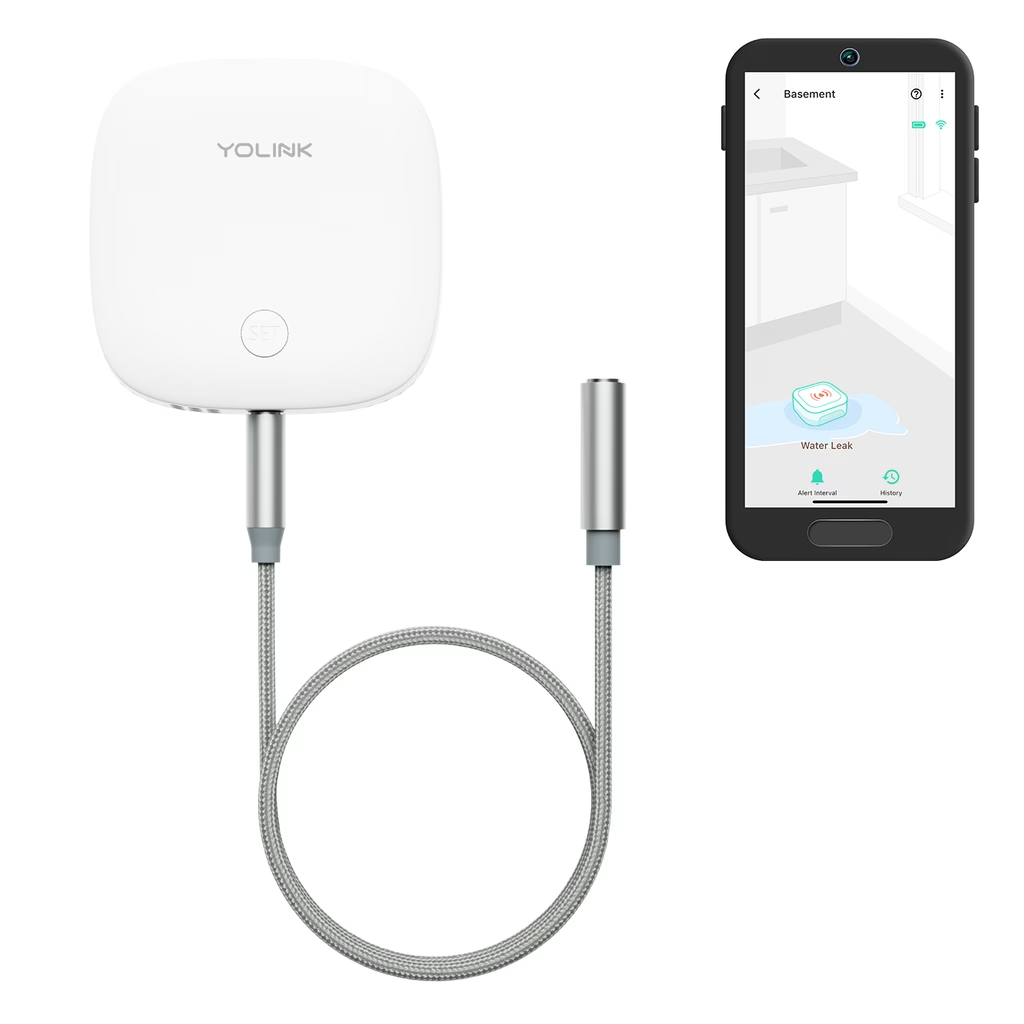
Now, YoLink is not a household name, and their app is functional rather than beautiful. But the hardware is genuinely impressive for the price. Battery life is rated at 5 years, which I have not been able to verify yet but early reports from long-term users support. If your main goal is “tell me about water before it ruins everything” and you do not want to build a whole Zigbee network, YoLink delivers.
✅ Best for: Large homes, detached structures, and anyone who wants leak detection without building a full smart home hub setup.
⚠️ Keep in mind: Limited smart home integrations compared to Zigbee/Matter. Works with Alexa and IFTTT but not native to SmartThings or Home Assistant without workarounds.
💰 Price range: $10–$15 per sensor (hub sold separately or in kits)

Temperature and Humidity: The Silent Data Collectors
Temperature and humidity sensors do not trigger dramatic automations. They are not going to save your basement or scare off intruders. What they do is give you a continuous feed of environmental data that makes your other automations smarter. Your thermostat says it is 72 in the hallway. But is it 72 in the upstairs bedroom where your kid claims it is “literally freezing”? Probably not. A $12 temperature sensor in every room turns your single-zone thermostat into something approaching a multi-zone system.
7. Aqara Temperature and Humidity Sensor E2 — Best Indoor Climate Sensor
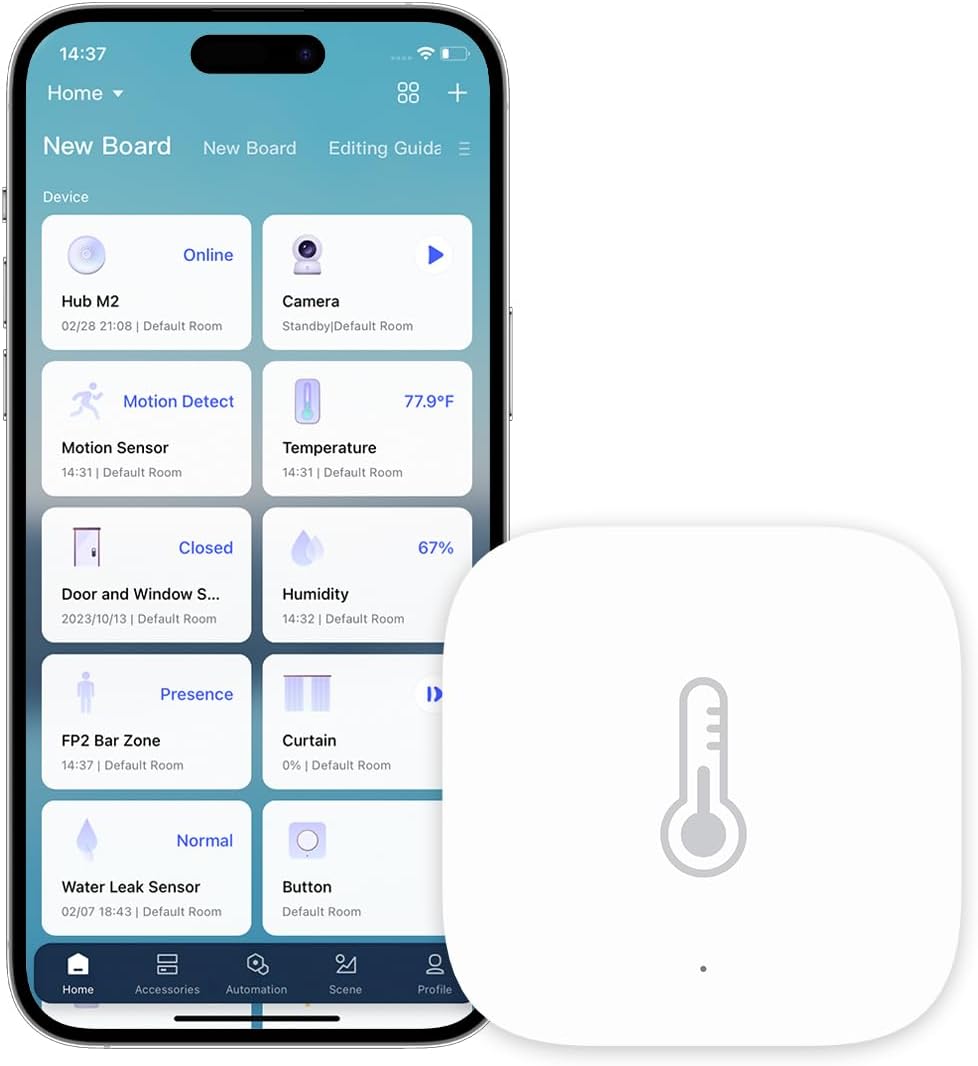
The E2 is Aqara’s Thread-enabled temperature and humidity sensor, and it is a meaningful upgrade over the older Zigbee versions. Thread means faster reporting, better mesh networking, and native Matter support. The sensor reports temperature within ±0.3°C accuracy and humidity within ±3%, which is more than sufficient for home automation purposes. It also includes a small e-ink display on the front that shows current readings, so it doubles as a tiny room thermometer.
The e-ink display is a small thing, but I appreciate it. Sometimes you just want to glance at the sensor and see the temperature without opening an app. The battery life is rated at about 2 years on a CR2450. It is barely larger than a matchbox. Stick it on a shelf, on a wall with the included adhesive, or just set it on a nightstand. It does its job quietly and reliably.
✅ Best for: Homeowners who want room-by-room temperature data to optimize heating and cooling.
⚠️ Keep in mind: Requires a Thread border router. The e-ink display is small and not backlit.
💰 Price range: $18–$25

8. Eve Weather — Best Outdoor Climate Sensor
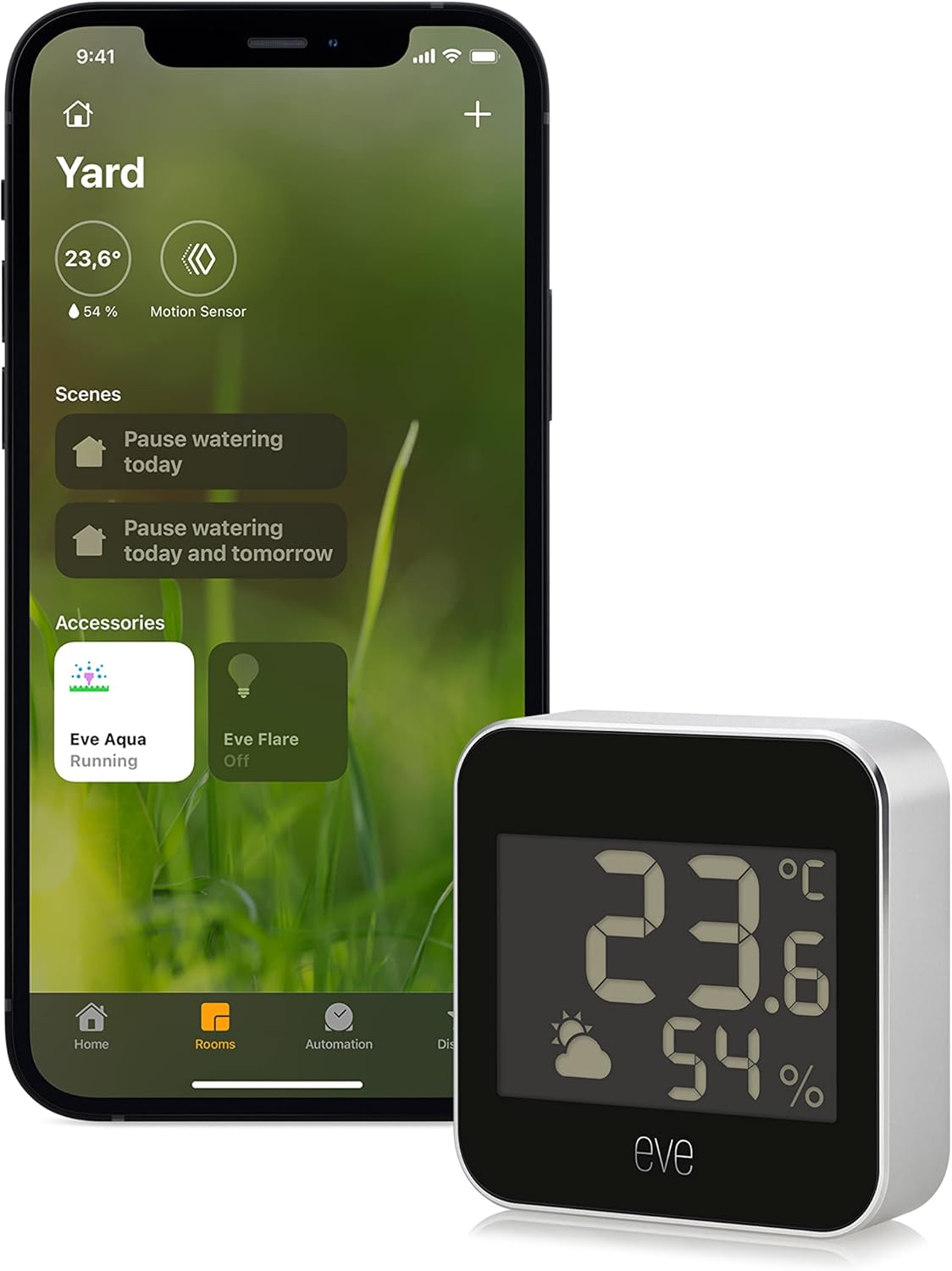
The Eve Weather is a compact outdoor sensor that tracks temperature, humidity, and barometric pressure over Thread. It is IPX4 water resistant, which means it handles rain and snow but should not be submerged. The build quality is a step above most smart sensors. It feels like a product designed by people who care about industrial design, which in this industry is rare enough to be noteworthy.
Barometric pressure might sound like data only a weather nerd would care about, but it is actually useful for automations. Rapidly dropping pressure can trigger preemptive alerts about incoming storms. Combined with temperature data, you can build automations that close smart blinds before the sun turns your living room into a greenhouse, or kick on a dehumidifier when outdoor humidity spikes. The Eve app provides beautiful historical charts, like EKG readouts from some electronic weather station, tracking trends over days, weeks, and months.
✅ Best for: Homeowners who want outdoor environmental data feeding into their automations.
⚠️ Keep in mind: IPX4 is splash-proof, not waterproof. Mount it under an eave or porch overhang, not in direct exposure to heavy rain.
💰 Price range: $55–$70

Presence Sensors: The Mind Readers
Presence detection is the holy grail of home automation. Not “something moved,” but “someone is in this room right now, sitting perfectly still, and the lights should stay on.” Traditional PIR motion sensors cannot do this. You sit still for five minutes and the sensor decides you have left. The lights go off. You wave your arms like a lunatic. The lights come back on. Repeat until you question every life choice that led you to this moment.
MmWave radar sensors solve this problem. They detect the micro-movements of breathing and heartbeat. You exist in the room, and they know it.
I already covered the Sonoff SNZB-06P above as a budget option. But if you want something more refined, with better zone control and sensitivity tuning, here is the upgrade pick:
For most people in 2026, the Sonoff SNZB-06P (listed above as pick #2) remains the sweet spot between price and performance. If you are running Home Assistant and want granular zone control, look at the Aqara FP2, which uses Wi-Fi but offers zone-based presence detection that can track multiple people in a single room. It is $55 to $65 and genuinely impressive, though the Wi-Fi dependency and higher price knock it out of a dedicated top slot for most users.
The Grand Sensor Showdown of 2026
| Sensor | Type | Protocol | Hub Required? | Battery Life | Price |
|---|---|---|---|---|---|
| 🏆 Aqara Motion P2 | Motion | Thread/Matter | Border router | 18–24 months | $25–$35 |
| Sonoff SNZB-06P | Presence (mmWave) | Zigbee 3.0 | Yes | USB powered | $14–$20 |
| 🏆 Eve Door & Window | Door/Window | Thread/Matter | Border router | ~18 months | $30–$40 |
| SmartThings Multipurpose | Door/Multi | Zigbee | Yes | ~18 months | $22–$30 |
| 🏆 Aqara Leak Sensor T1 | Water Leak | Zigbee 3.0 | Yes | ~2 years | $14–$20 |
| YoLink Leak Sensor 2 | Water Leak | LoRa | YoLink hub | ~5 years | $10–$15 |
| Aqara Temp/Humidity E2 | Climate | Thread/Matter | Border router | ~2 years | $18–$25 |
| Eve Weather | Outdoor Climate | Thread/Matter | Border router | ~1 year | $55–$70 |
Frequently Asked Questions
Q: What protocol should I choose for smart home sensors in 2026?
A: For most homeowners, Zigbee or Matter over Thread offers the best balance of reliability, speed, and battery life. Wi-Fi sensors drain batteries fast and clog your network. Thread-based Matter sensors are the newest option and offer excellent responsiveness with low power consumption. If you already have a SmartThings or Hubitat hub, Zigbee is a proven and affordable choice. Starting fresh? Go Thread/Matter.
Q: Do smart home sensors work without a hub?
A: Some do, but most of the best sensors require a hub or border router. Wi-Fi and some Bluetooth sensors connect directly to your router, but they tend to have worse battery life and reliability. Thread sensors need a border router (built into HomePod Minis, some Nest Hubs, and some smart speakers), which you may already own. The hub requirement sounds like a downside, but it is actually what makes sensors fast and reliable.
Q: How long do batteries last in smart home sensors?
A: Most Zigbee and Thread sensors last 1 to 3 years on a single coin cell battery. Motion sensors with frequent triggers may need replacement closer to 12 to 18 months. Wi-Fi sensors burn through batteries much faster, sometimes in just a few months. Temperature and door sensors with infrequent triggers tend to last the longest. Leak sensors, which spend most of their life idle, often hit the 2-year mark easily.
Q: Can I mix sensor brands in one smart home system?
A: Yes, and you should. No single company makes the best sensor in every category. A SmartThings or Hubitat hub can run Zigbee, Z-Wave, and Matter devices side by side. Home Assistant supports practically everything. As long as your sensors share a common protocol or your hub supports multiple protocols, mixing brands is not only fine, it is the smart strategy.
Q: Where should I place smart home sensors for the best results?
A: Motion sensors work best in corners of rooms, about 7 feet high, aimed across the room rather than toward doorways. Door and window sensors go on the frame and the moving part, with the magnet on the door and the sensor on the frame. Leak sensors belong directly on the floor near water heaters, washing machines, under sinks, and near sump pumps. Temperature sensors should be away from direct sunlight, HVAC vents, and exterior walls for the most accurate readings.
Final Verdict: Build the Sensor Network, Then Build Everything Else
I have spent more hours than I care to admit tinkering with smart home gear in this old house in the western suburbs, and I can tell you with absolute certainty that sensors were the turning point. Not the fancy light bulbs. Not the voice assistants. The sensors. They are the difference between a smart home and a home full of expensive toys you control with your phone instead of a switch.
If you are starting from zero, here is your plan. One Aqara Motion Sensor P2 in the hallway. One Eve Door and Window sensor on your front door. One Aqara Leak Sensor T1 near your water heater. That is under $70 and it will fundamentally change how your house operates.
If you are an enthusiast ready to go deeper, blanket every room with presence sensors and temperature monitors. Build automations that respond to occupancy, climate, time of day, and environmental conditions. This is where home automation stops being a novelty and starts being a system that genuinely makes your life better.
The smart home industrial complex wants you to buy a $400 smart appliance. I am telling you to buy an $18 sensor and a $4 smart plug. The sensor network is the foundation. Everything else is decoration.
Check current prices using the links above. Amazon pricing changes frequently and deals appear often, especially on multi-packs of sensors where the per-unit cost drops significantly. If you are buying three or more of any sensor on this list, look for bundle pricing before you check out.
Go build something that thinks for itself.



