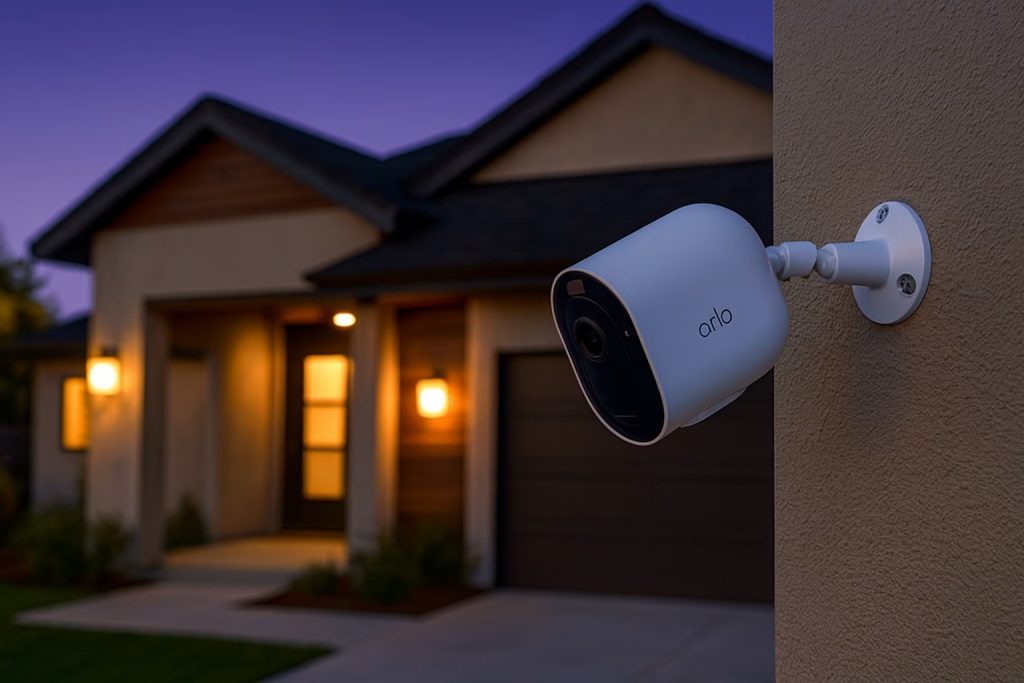
Your smart doorbell just recognized your spouse coming home and automatically unlocked the front door. Pretty cool, right? But here’s the thing: that same artificial intelligence making your home more convenient and secure is also creating brand new ways for bad actors to potentially exploit your system.
This is what I call the AI security paradox. The technology that’s revolutionizing home security by reducing false alarms and catching real threats is simultaneously opening doors (sometimes literally) to attacks that didn’t exist just a few years ago.
If you’re considering smart home security or already have some devices installed, you need to understand both sides of this coin. Let’s dive into how AI is making homes safer than ever, the new risks it’s creating, and most importantly, how you can protect yourself while still enjoying the benefits.
How AI is Making Your Home Actually Useful (Finally)
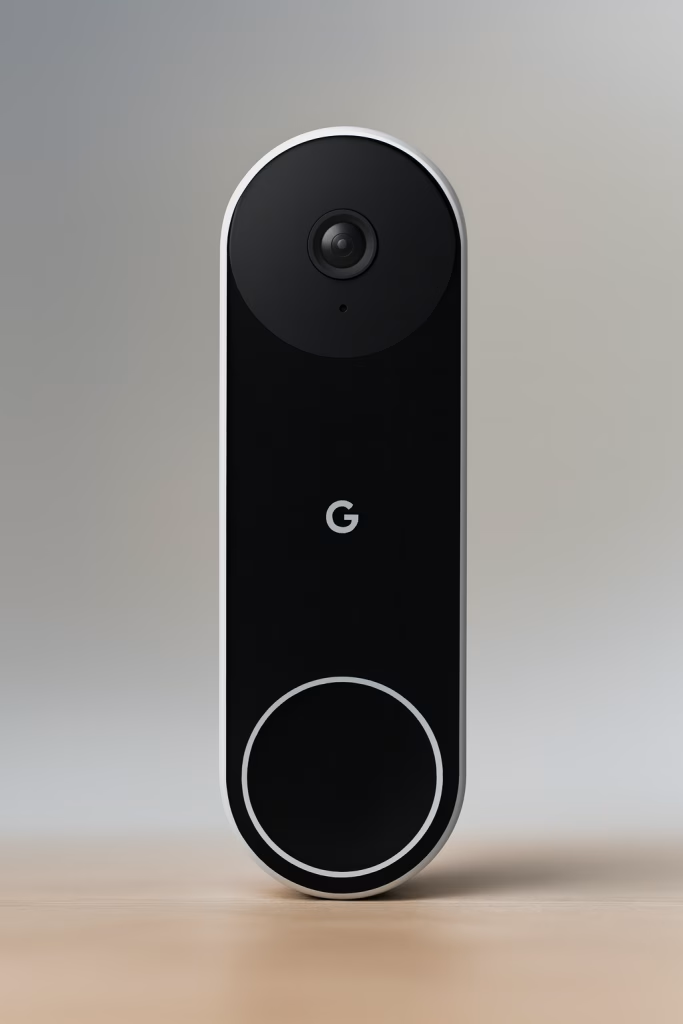
Let me tell you about my old Ring doorbell. This thing was like that overeager friend who texts you about everything. Every single car that drove past my house triggered a “motion detected” notification. The mail truck, the neighbor’s dog, a leaf blowing across the driveway. I’m not kidding when I say I was getting 30-40 notifications a day from this thing.
I actually started ignoring them completely, which kind of defeats the whole purpose of having a security system, right? Traditional home security was pretty much this frustrating across the board. Motion sensors that couldn’t tell the difference between your cat and a burglar. Cameras that recorded everything but told you nothing useful. Alarms that went off when a leaf blew past your window.
Smart Threat Detection That Actually Works
Modern AI security systems don’t just detect motion. They understand what they’re seeing. Your Ring camera can now tell the difference between the UPS driver, your teenager, and someone who shouldn’t be there. Google Nest systems have gotten so good at facial recognition that they’ll send you a friendly “Sarah’s home!” notification when they recognize family members, while immediately alerting you about unknown faces.
The difference is night and day. Instead of my phone buzzing constantly with useless alerts, I now get maybe 2-3 meaningful notifications per week. When my system alerts me now, I actually pay attention because I know it’s probably something I care about.
The End of False Alarm Hell
If you’ve ever had a traditional security system, you know exactly what I’m talking about. Wind, shadows, pets, delivery trucks. Everything seemed to set them off. According to security industry analysis, AI systems have reduced false alarms by up to 95%, turning your security system from an annoyance into something you actually trust.
Ring has introduced what they call “Smart Alerts” that use AI to distinguish between people, packages, vehicles, and animals. Nest has “Intelligent Alerts” that learn your family’s faces and can tell you specifically who’s at the door. SimpliSafe’s newer cameras have “Smart Motion Detection” that filters out things like moving shadows and tree branches.
This isn’t just a Ring thing either. Companies like Arlo, Eufy, and even traditional security companies like ADT have all rolled out AI-powered filtering systems to solve this exact problem. The technology has gotten so good that my current system knows the difference between my neighbor walking his golden retriever and an actual person approaching my door.


Learning Your Life
Here’s where AI gets really interesting. These systems learn your family’s patterns. They know when your kids usually get home from school, when you typically leave for work, and which neighbors regularly walk their dogs past your house.
This means they can spot genuine problems. If someone’s trying to break in at 2 AM on a Tuesday, your system recognizes that as unusual activity. If your daughter comes home sick from school at noon, it doesn’t freak out because it understands family routines.
Some systems even integrate with local crime data to adjust their sensitivity based on what’s happening in your neighborhood. Pretty smart stuff when it works properly.
The Dark Side: When Smart Gets Scary
But here’s where things get concerning. The same AI making your home smarter is also making it vulnerable in ways that would make traditional burglars jealous.
Voice Cloning Gets Terrifyingly Easy
Remember when you needed hours of someone’s voice to impersonate them? Those days are gone. Today’s AI can clone your voice from just a few seconds of audio. Research shows that criminals can now create convincing voice clones using brief recordings, potentially commanding your smart locks or disabling your security system by impersonating you.
Think about all the ways your voice gets recorded these days. Doorbell interactions when you talk to delivery drivers, phone calls, social media videos, even just talking to your smart speaker. It’s not hard for someone with bad intentions to get the audio they need.
I’ve tested some of these voice cloning tools myself (for legitimate purposes, obviously), and it’s honestly scary how good they’ve gotten. With just a 10-second clip of someone talking, you can create a pretty convincing fake voice that could fool family members, let alone automated systems.
Making AI See What Isn’t There
Researchers have discovered something called “adversarial attacks.” Basically ways to fool AI systems that sound like science fiction but are very real. Someone could wear specially designed patterns that make them invisible to your AI cameras, or use sound frequencies you can’t hear to issue commands to your smart speakers from outside your home.
It’s like having a master key that only works on smart locks, but wouldn’t do anything to a traditional deadbolt.
Corrupting the Learning Process
This one’s particularly sneaky. Instead of attacking your system directly, criminals can corrupt the learning process itself. By feeding AI systems false information during training, they can create hidden backdoors that activate later. Your security system might learn to identify burglars as harmless visitors, all because someone poisoned its training data months earlier.
Think about it this way: if someone could secretly teach your security system that people wearing red hoodies are always friendly neighbors, they could exploit that later when they want to break in.
The Story That Still Gives Me Chills
These aren’t theoretical problems. They’re happening right now. In 2019, a hacker accessed a Ring camera in an 8-year-old girl’s bedroom in Mississippi and told her he was Santa Claus. The terrified child screamed for her mother while the stranger played disturbing music and tried to convince her to misbehave. The family had purchased the camera just days earlier, thinking they were adding security to their home.
As a parent, this story absolutely horrifies me. The idea that a device meant to protect your children could become a way for strangers to access and terrorize them is the stuff of nightmares.
Multiple families have reported similar incidents with hackers accessing Ring cameras to spy on children, threaten family members, and gather information for future break-ins. Ring faced legal action after employees were caught viewing customer videos inappropriately, and that’s just what we know about.
Your Home Becomes a Data Goldmine
AI security systems are incredibly nosy. They collect way more data than you realize. Not just video footage, but voice recordings, behavioral patterns, biometric data, and detailed information about your daily routines.
Recent research from NYU and other universities found that smart home devices create uniquely identifiable “fingerprints” for households, making homes as distinctive as “one in 1.12 million.” These systems enable detailed behavioral profiling, lifestyle inference, and predictive analytics about family activities.
I’ve looked into what data my own security system collects, and it’s honestly eye-opening. It knows when I’m home, when I leave, who visits, what cars are in my driveway, and even patterns about my family’s daily routines. That’s incredibly valuable information if it falls into the wrong hands.
The bigger concern? This data often gets stored indefinitely, shared with third parties, and accessed by employees you’ll never meet.
How to Protect Yourself (Without Going Full Hermit)
Don’t panic and throw out your smart security system. The benefits are real, and you can minimize the risks with some smart strategies. I’ve learned a lot of this the hard way, so let me share what actually works.
Start with Your Network Foundation
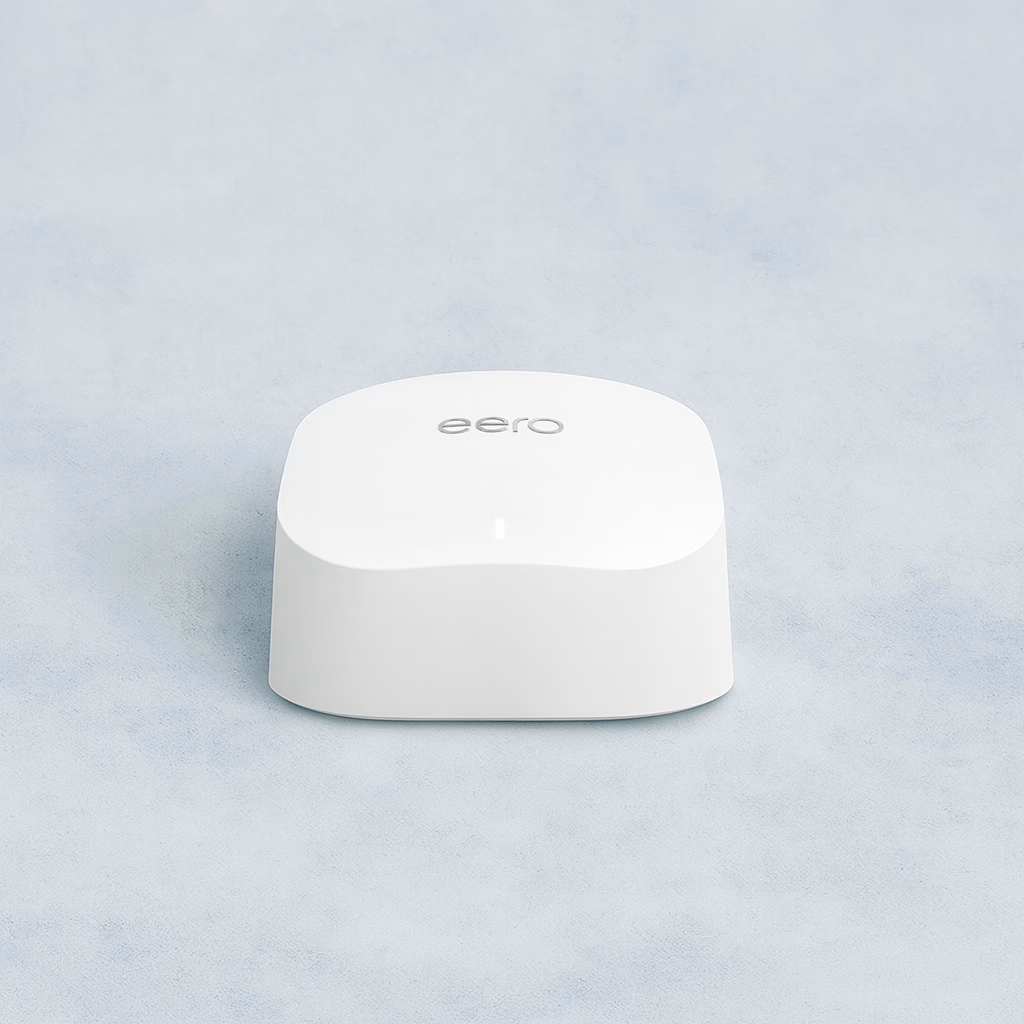
Your router is the gateway to everything in your smart home. Change the default admin password immediately. Seriously, do it today. I can’t tell you how many people I know who are still using “admin/password” as their router login. Enable WPA3 encryption if your router supports it, or at least WPA2 if it doesn’t.
Create a separate guest network just for your smart home devices. This way, if someone compromises your doorbell, they can’t access your laptop or phone. Think of it as putting your smart devices in a different room from your important stuff. I’ve got all my smart home gear on a network called “IoT Stuff” that’s completely separate from my work computers and personal devices.

Basic Device Hygiene Goes a Long Way
Change default passwords on every smart device. Yes, every single one. I know it’s tedious, but it’s also the number one way these things get compromised. Enable two-factor authentication wherever it’s available. Keep firmware updated. Many attacks exploit old, known vulnerabilities that patches have already fixed.
Review what data each device collects and turn off anything you don’t need. Does your security camera really need access to your contacts? Probably not. I went through all my devices last year and was amazed by how many permissions I could turn off without affecting functionality.
Apple’s Approach Actually Makes Sense
If you’re already in Apple’s ecosystem, HomeKit deserves serious consideration. Apple has built their smart home platform with privacy as a core principle. All HomeKit communication is encrypted end-to-end, your data is stored locally when possible, and Apple can’t access your home automation data even if they wanted to.
Security experts consistently rank Apple HomeKit as the most secure smart home platform, requiring both authentication and encryption for all device communication. While the device selection is more limited than other platforms, what’s available meets Apple’s strict security requirements.
HomeKit Secure Video is particularly impressive. Instead of storing your camera footage in some company’s cloud servers, it gets encrypted and stored in your iCloud account where only you can access it. Apple never sees your videos, and neither do random employees at security companies. That’s a level of privacy you just don’t get with most other systems.
The trade-off is fewer device options and generally higher costs, but if privacy is a priority for your family, it’s worth considering.
Three Products That Actually Move the Needle
If you want to level up your protection, these are the tools I’d actually spend money on:
ExpressVPN Aircove Router – This router has built-in VPN protection, automatically securing all your smart home devices without you having to configure each one individually. It’s like having a bodyguard for your entire network. The setup is surprisingly simple, and once it’s running, you don’t have to think about it.
Firewalla Purple – Think of this as a security guard for your home network. It monitors all traffic, blocks suspicious activity, and gives you detailed insights into what your devices are doing. No monthly fees, just one-time purchase. I’ve been using one for about six months, and it’s caught several devices trying to phone home with data I didn’t know they were collecting.
SimpliSafe with Professional Monitoring – Their AI-powered system connects to real humans who can assess threats and even talk to intruders directly through your cameras. When the AI isn’t sure about something, actual people make the call. I’ve watched videos of their monitoring team verbally deterring someone trying to break into a house, and it’s pretty effective.


Looking Forward: Where This All Goes Next
AI home security is only going to get more sophisticated. We’re talking about systems that can predict break-ins before they happen, coordinate with local police automatically, and adapt to new threats in real-time.
The US government is launching a Cyber Trust Mark program in 2026 that will help identify smart home devices with strong security standards. Look for this label when shopping for new equipment. Recent NIST research emphasizes the need for better transparency and user control in smart home systems.
But here’s the reality check. As AI gets smarter at protecting homes, criminals are getting smarter at attacking it. This isn’t a problem that gets solved once and forgotten. It’s an ongoing arms race, and we’re all stuck in the middle of it.
The companies making these systems are constantly playing catch-up with new threats. Just when they solve one problem, like reducing false alarms, a new attack method emerges. It’s frustrating, but it’s also the reality of living with connected technology.
The smart approach isn’t to avoid AI security altogether. It’s to embrace the benefits while taking reasonable precautions to minimize the risks. Secure your network, choose reputable products, understand what data you’re sharing, and stay informed about new threats.
Your goal should be a smart home security system that fades into the background of your daily life. Protecting your family without making you feel like you’re living in a surveillance state. With the right approach and a healthy dose of skepticism about new features, that’s absolutely achievable.
The AI security paradox isn’t going away anytime soon. If anything, it’s going to get more complex as these systems get more sophisticated. But if you understand both sides of it, you can make informed decisions that keep your family safe while preserving your privacy.
At the end of the day, that’s really all any of us can ask for. A little bit of security, a little bit of convenience, and the peace of mind that comes from understanding the trade-offs we’re making.
Frequently Asked Questions:
A: Honestly, no. The benefits are real and significant. The key is being smart about it. Traditional security systems have their own vulnerabilities, and they definitely don’t offer the convenience and intelligence of modern AI systems. Just go in with your eyes open, secure your network properly, and choose reputable companies with good track records.
A: Watch for unusual behavior: notifications at weird times, devices turning on or off by themselves, or changes to your settings that you didn’t make. Check your network traffic if you have a tool like Firewalla. Most importantly, if you get locked out of your own system or see unknown users in your account, that’s a red flag. Set up account alerts so you’re notified of any login attempts.
A: Generally, yes. The cheapest systems often cut corners on security to hit low price points. You don’t need to buy the most expensive option, but investing in systems with proper encryption, two-factor authentication, and local storage options is worth the extra cost. Think of it as insurance for your family’s privacy and safety.
A: If your current system is more than 3-4 years old and isn’t getting regular firmware updates, it’s probably time to upgrade. The AI improvements in newer systems really do make a difference in reducing false alarms and improving accuracy. Plus, older systems often lack modern security features that are now considered standard.
A: I’d say every 6 months, or whenever you add new devices to your network. Check for firmware updates, review what data each device is collecting, and make sure your passwords are still strong. It’s also a good time to check if any devices are phoning home with data you weren’t aware of.
A: Avoid systems that require all data to go through the cloud with no local storage option. Be wary of companies that won’t clearly explain their privacy policies or data sharing practices. Skip anything that doesn’t support two-factor authentication. And if a deal seems too good to be true for the features offered, it probably is – especially with security equipment.



