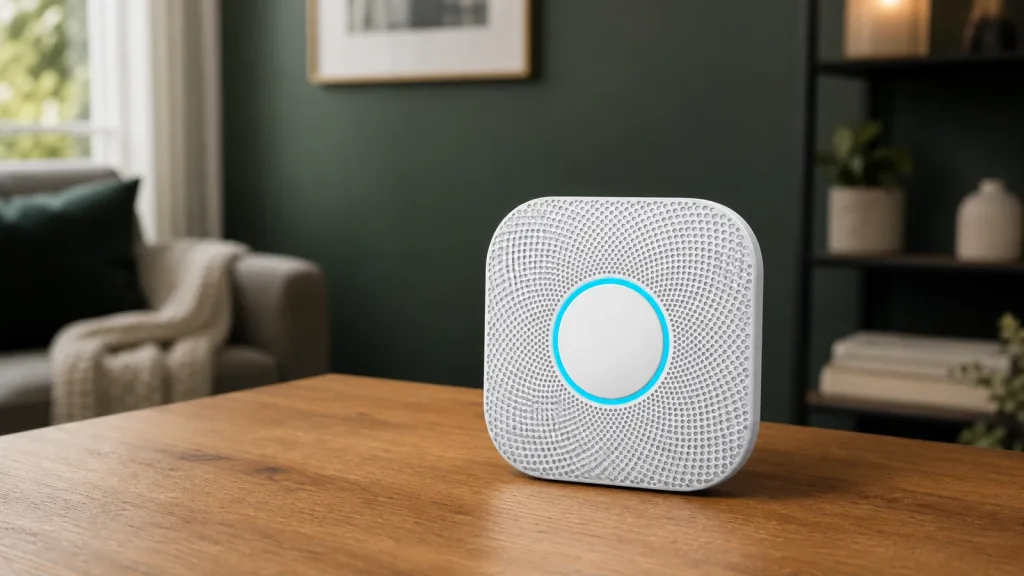
Here’s the question nobody wants to admit they’re thinking: Do you even need a smart smoke detector, or is this just another category where “smart” means “twice the price for features you’ll never use”?
Fair question. I’m running HomeKit in a 1970s house with enough quirks to keep me humble, and I’ve spent enough time in smart home forums to know what works and what’s just expensive noise. When it comes to smoke detectors, though, “smart” actually does something.
Real talk: A connected smoke detector that alerts your phone, silences false alarms from your stovetop, and coordinates with the rest of your home isn’t luxury. It’s the difference between a 2AM panic where you’re half-asleep fumbling for the button and a situation where you’re actually aware something’s happening. I’ve watched people who ignored the smart detector recommendation get woken by the actual alarm at 3AM because the battery was low and they didn’t know. Don’t be that person. Smart detectors are part of a comprehensive home sensor network that keeps you informed about what’s happening in your house.
The market’s gotten smarter too. You’ve got real choices now. Some of them are actually better than the old beeping boxes we grew up with.
Before You Buy Anything, Read This Part
Five things to know before you spend money.
Sensor type: Photoelectric sensors are better at detecting smoldering fires. Ionization sensors catch flaming fires faster. The best units use both. This matters more than the “smart” part.
False alarm rate: Your stovetop shouldn’t trigger the alarm every time you make dinner. Look for units with cooking zones or heat detection that can tell the difference between smoke and steam. This is where a lot of budget detectors fail.
Interconnectivity: When one detector goes off, they should all go off. If your bedroom is upstairs and the fire starts in the kitchen, you need to know immediately. Smart units handle this over WiFi. Non-smart hardwired units do it too, but you lose the phone alerts.
Phone alerts: If you’re away from home or asleep upstairs, you need to know. The detector should send a notification when there’s actual danger, not just when the battery’s dying.
Home integration: Can it talk to your HomeKit system or other smart home hub? Does it matter? Depends on your setup. Some people never use it. Some people swear by it.
The Nest Protect: The Old Favorite, Now Discontinued
Straight talk before you fall for this one: Google stopped making the Nest Protect in early 2025. Existing units keep working until their ten-year expiry and you can still find stock, but it is on the way out. Google handed the baton to First Alert, and the official replacement is the First Alert SC5. It uses the same mounting bracket and lives in the Google Home app, so for a new Google-household install, buy the SC5. The notes below still explain why people loved the Protect and why its successor is the safe bet.
Google Nest Protect
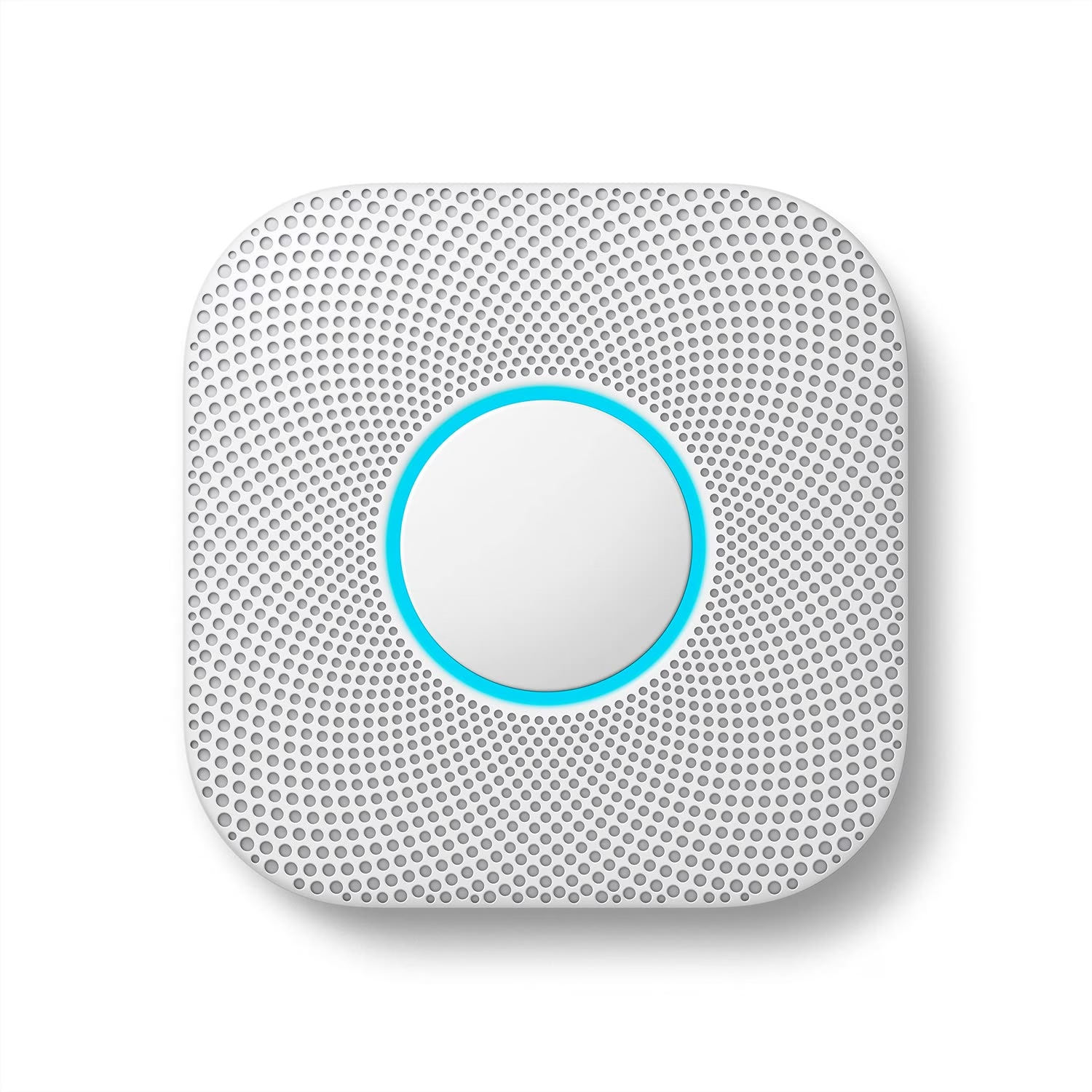
If you’re going to buy one smart smoke detector, this is probably the one you should buy. Not because it’s perfect. Because it does the job, plays nicely with everything else, and doesn’t annoy you.
The detection is dual-sensor, which is the right move. The app gives you actual useful information: temperature readings, humidity, battery status. You can silence false alarms from the app if you’re standing there in the smoke from your burnt toast and don’t want the alarm screaming at your sleeping kids upstairs.
One weird quirk: Google disabled one of the motion-detection features a few years ago for privacy reasons. It’s fine. You don’t need it. It was a novelty feature anyway.
If you’re already in the Google ecosystem, this is a natural fit. Works with your Google Home, pulls into your home automation setup, sends notifications that actually matter. The night light feature is surprisingly useful. Not a game-changer. Just nice.
The unit itself looks clean on the ceiling. Not bulky. Not trying too hard. Just a white disc that does its job and doesn’t pretend to be anything else.
Real talk: At this price point, you could buy four or five of these for a whole-house setup, and that’s the minimum you should do anyway. Coverage matters more than any single unit.
Price range: $80-100 per unit
First Alert Onelink: The Quiet Workhorse
First Alert Onelink Safe and Sound
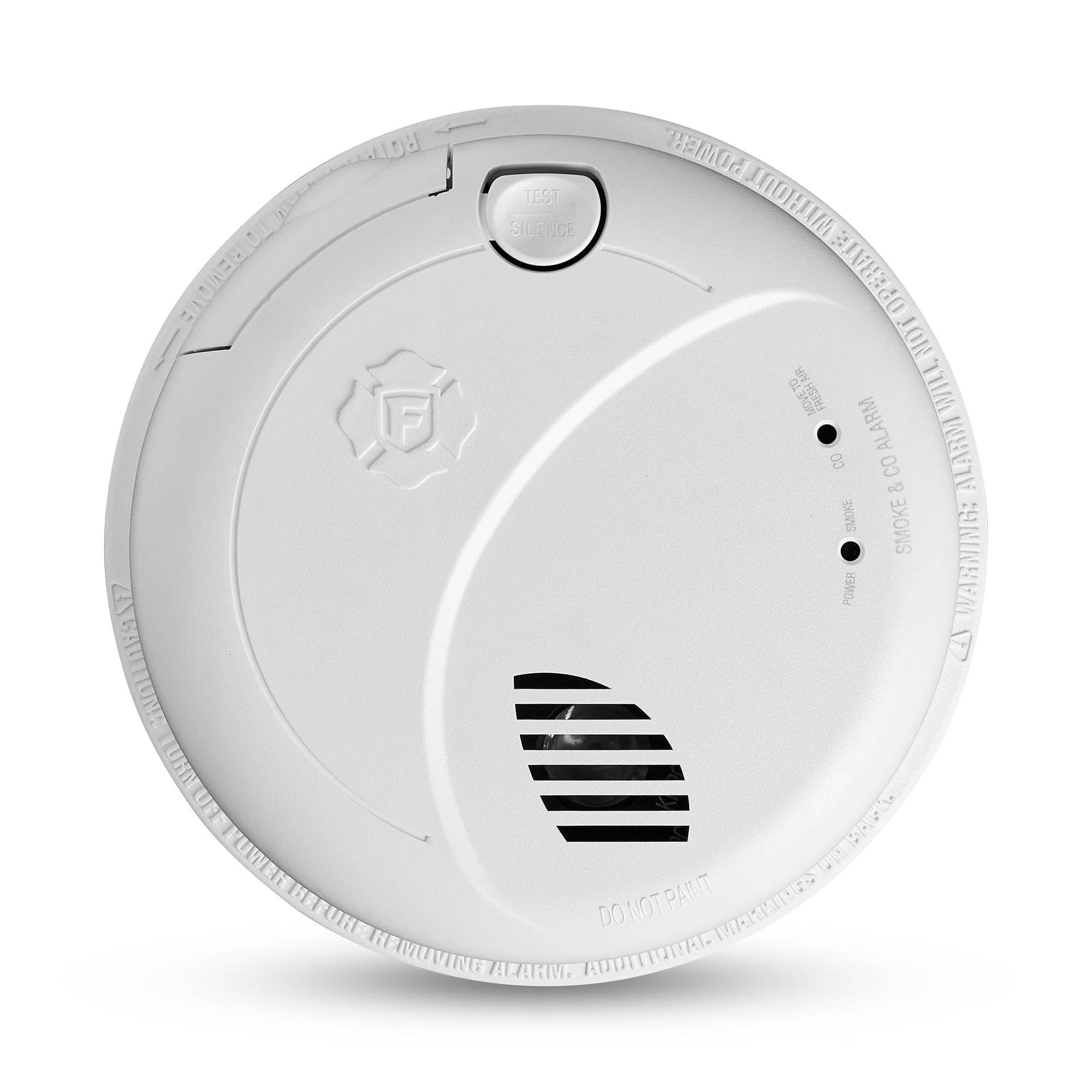
This one’s built by someone who actually knows the smoke detector business. First Alert has been doing this since before smart homes existed, and it shows.
Here’s what makes it interesting: Onelink is actually a combination detector and speaker. You can play music through it. Serious option? No. But if you’re renovating a bathroom or a laundry room, having a functioning speaker built into your detector is one less thing to mount.
The detection is solid. Dual-sensor again. The app is straightforward without being fancy. Phone alerts work. Interconnection works. It works natively with Apple Home through HomeKit, plus Alexa through its built-in speaker, which makes it the right pick if you’re all-in on Apple. But if you’re mixing platforms or not deeply committed to one ecosystem, you’ll be fine here.
People on the forums mention fewer false alarms with this unit compared to some budget options. The battery life is also noticeably good. You’re not replacing batteries every year.
The speaker feature feels gimmicky until you actually use it. Then it’s kind of great. Not worth buying the whole unit for. But a nice bonus if you’re already committed to upgrading.
Price range: $70-90 per unit
The Ring Listener: Don’t Replace Your Detectors, Just Outsmart Them
Ring Alarm Smoke and CO Listener
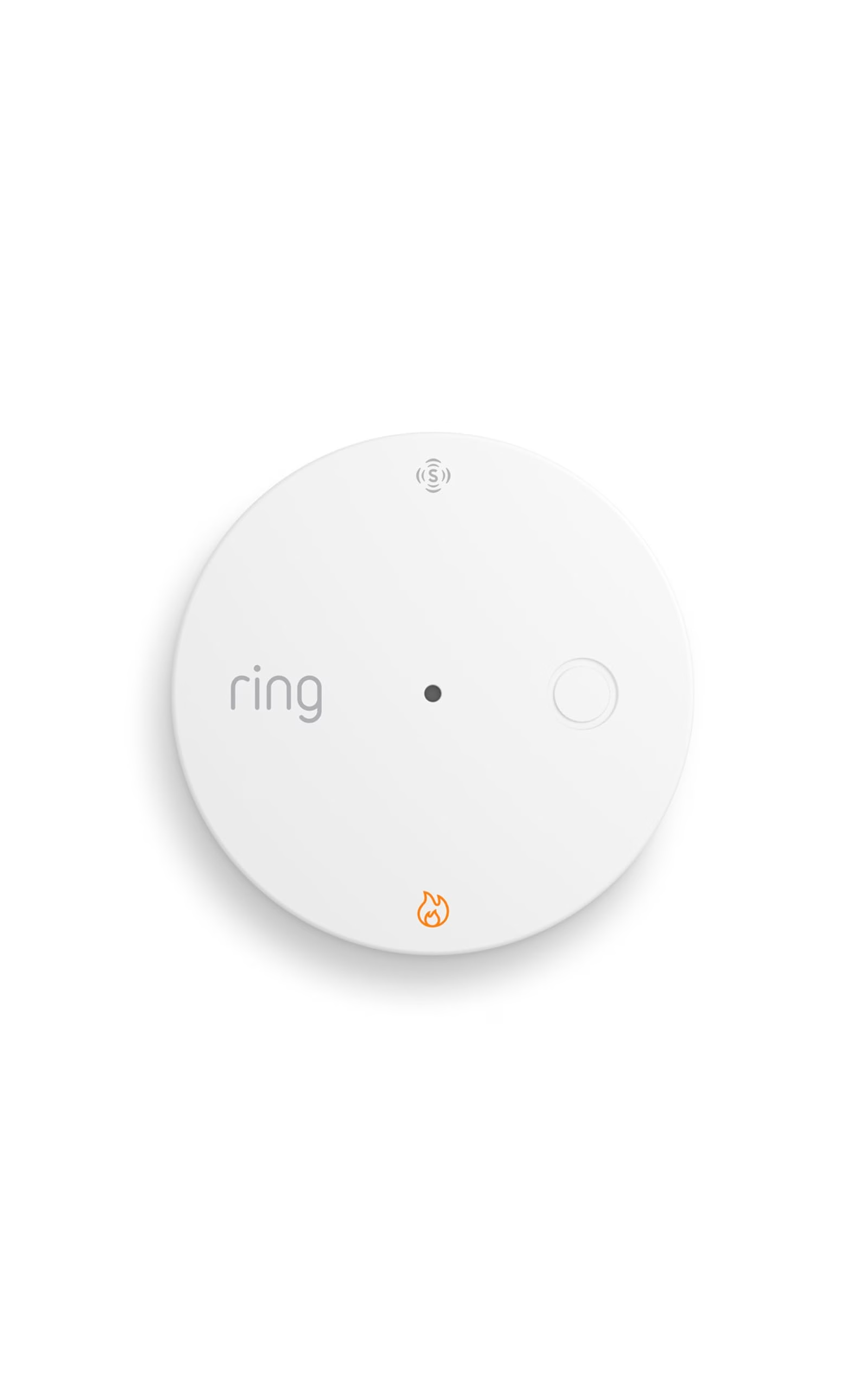
Here’s the move for people who have decent hardwired detectors already or who don’t want to rip out their entire system: Get this. It listens to your existing alarms and sends you the alert.
This is the practical play. You already have smoke detectors in your house from the builder or a previous owner. They work fine. They’re hardwired. You don’t want to replace them all. So instead of buying brand new smart detectors everywhere, you put these listeners near your current detectors. When your old detector goes off, the listener hears it and sends you a notification.
Is this as good as a true smart detector with dual-sensor detection? No. But it’s honest about what it is. And it costs a fraction of the price.
The obvious limitation: You’re still relying on your original detectors. If they’re old or cheap, you’ve got old or cheap detection. But as a way to smart-ify your existing system without a full retrofit, it’s the best solution in the market.
Works with Ring’s system if you’re already using it. Also works standalone. Battery lasts months. The app knows if it’s heard an alarm recently. All the basics are covered.
I know people who went this route in their rental or in a house they’re not staying in long term. Makes sense. You get the smart notification, you don’t rip out the landlord’s detectors, everybody wins.
Price range: $30-50 per unit
What About Everyone Else?
Kidde Smart Alarm: Solid detection, hit-or-miss app. People report that the interconnection works reliably, but the notifications are sometimes delayed. For the price, you’re getting decent hardware with middling software. Not a bad option if you find it on sale.
X-Sense Wireless Interconnected: Budget favorite that actually works. No app, which is either a feature or a bug depending on how you feel about monitoring. The wireless interconnection is reliable. If you want smart detection and an app, this isn’t your move. If you want good hardware at a good price, it’s worth looking at.
SimpliSafe Smart Smoke Detector: Only makes sense if you’re already using SimpliSafe for security. Builds into their system, integrates with their app. Standalone? Skip it. As part of a bigger SimpliSafe setup? It’s the right call.
Where to Put These Things (Your Town Has Opinions)
Frequently Asked Questions
Q: Do I really need to replace all my detectors at once?
A: No. You can upgrade gradually. Start with bedrooms and main hallways. You can mix old and new detectors in your house. If they’re hardwired and you want interconnection, you’ll want them all on the same system eventually. But mixing brands in the same house is fine as a temporary situation.
Q: Will a smart smoke detector actually alert me if I’m asleep?
A: Yes, if your phone is on and notifications are enabled. But you should also have a loud local alarm because your phone might be in another room or on silent. The local alarm is always going off. The phone notification is the bonus that lets you check from upstairs or outside or get alerts if you’re away from home.
Q: What about battery-powered smart detectors for houses without hardwired systems?
A: Works fine. Battery lasts 3-5 years depending on the model. Just remember to check them yearly and set a phone reminder to replace batteries before they get low. The smart detectors will alert you when the battery is dying, which is way better than the random 2AM chirp from a regular detector.
Q: Are expensive detectors actually better at detecting fire?
A: At a certain point, no. Dual-sensor detection is the important part. Everything after that is features and software. More expensive doesn’t mean faster detection. It means better app, better integration, better design. Don’t spend money on detection capability you don’t need. Spend it on the hardware that actually goes off.
Bottom Line
Here’s the thing about smart smoke detectors that separates them from most of the rest of the “smart home” market: they actually make you safer. Not by 10 percent. By a meaningful margin.
You get faster notification. You eliminate the guessing game about battery status. You can silence false alarms instead of ripping the detector off the ceiling at 2AM. You get coordinated alerts across multiple detectors instead of wondering which room the alarm is coming from. You get to check your detectors from your phone instead of climbing a ladder. Combined with smart home automation, they become part of a coordinated safety system that responds intelligently to emergencies.
Is that worth the extra money compared to a basic detector? Most of the time, yes. Not because the detection is better. Because the whole system is smarter. And in a category where the stakes are actual life safety, smarter means better.
Buy the Onelink if you’re on HomeKit, since it’s the one that actually speaks Apple Home. Buy the First Alert SC5 if you’re on Google Home, since it’s the official replacement for the now-discontinued Nest Protect. Buy the Ring listener if you’re not ready to replace everything. Buy more detectors than you think you need. Check them twice a year. And then trust them to do their job.



