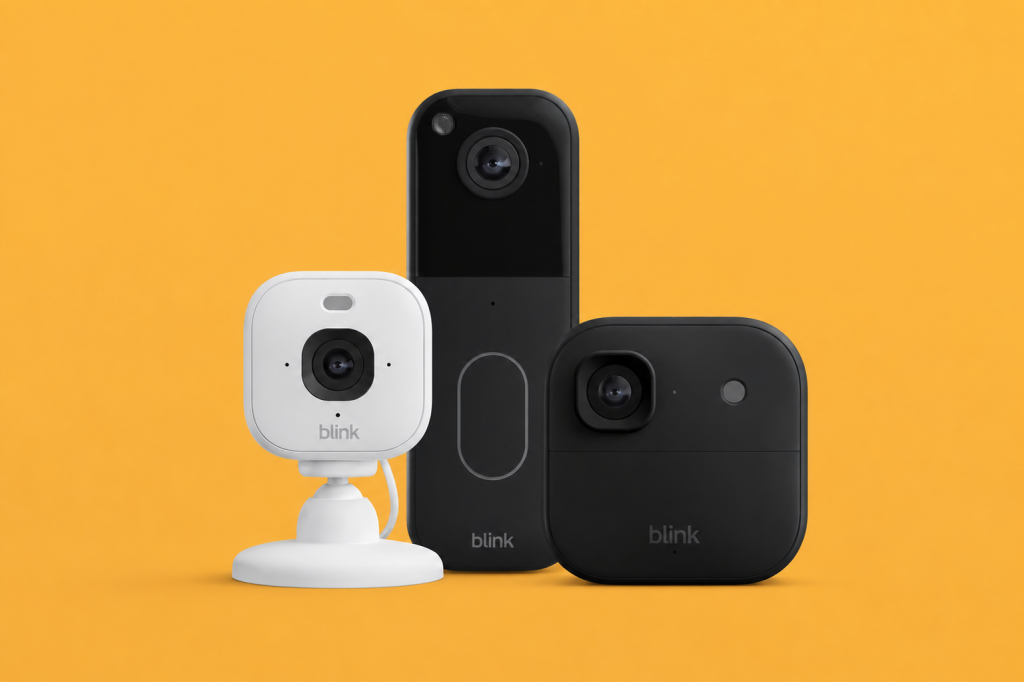
The Wire flagged this one in early July and the more I dug, the more it turned into two stories. One is about eight dollars. The other is about your face, your neighbor’s face, and a 2008 law from Illinois that quietly decides which smart home features you’re allowed to buy.
Start with the eight dollars.
What Blink is actually selling
In late June, Blink, Amazon’s budget camera brand, rolled out two new subscription tiers, Basic AI and Plus AI. The headline feature is AI-written descriptions of your motion clips. Instead of “motion detected,” the notification reads something like “a person walked up the driveway carrying a box.” Useful, the same idea Apple is shipping this fall.
The rest of the pitch is future tense. Consolidated alerts, unusual-activity flags, and a Known Faces feature that recognizes the people who live in and visit your house, all “coming later this year.” What’s on sale today is the captions.
Now the math. Regular Plus runs $11.99 a month. Plus AI runs $19.99. That’s eight extra dollars a month, ninety-six a year, for AI descriptions now and a promissory note for the rest. I wrote a whole section of the vision essay about the subscription trap, the genuinely useful feature that shows up wearing a monthly fee, and I’d point right at this. Paying today for features that ship “later this year” is how the smart home industry finances its roadmap with your money. If the captions alone are worth $96 a year to you, fine, at least you’re buying something real. Just be honest with yourself about which part of the pitch you’re paying for.
The part nobody reads, until it bans the feature
Here’s where it gets interesting. If you live in Illinois, you can’t buy these plans at all. Not the captions, not any of it. And when Known Faces does ship, it won’t be available in Illinois, Texas, or Portland, Oregon either. That’s not Blink being lazy. That’s biometric privacy law, and it’s worth two minutes of your time because it explains a lot of weird gaps in the smart home.
Illinois has a law called BIPA, the Biometric Information Privacy Act, on the books since 2008. The idea is simple. Your faceprint, your fingerprint, your voiceprint, these are things you can’t change if they leak, unlike a password. So in Illinois, a company has to get written consent before collecting them, and here’s the teeth, private citizens can sue directly, roughly $1,000 to $5,000 per violation. Per face, per scan, per person.
Two examples make it real. Facebook’s old photo tag suggestions, the feature that recognized your friends automatically, ended in a $650 million settlement with Illinois users, one of the largest privacy payouts ever. And a White Castle employee who clocked in with her fingerprint for years argued each scan was a separate violation, which at one point put the burger chain’s theoretical exposure in the billions before Illinois softened the math. When lawyers say “per violation,” Illinois means it.
Now picture what a Known Faces camera on your porch actually does. It builds faceprints of everyone who walks up, the babysitter, the mail carrier, the neighbor grabbing your package, and precisely none of those people signed a consent form. In Illinois, that’s a class action with a doorbell attached. So Blink, like Google before it, whose Nest cameras have kept their familiar-face feature switched off in Illinois for years, simply doesn’t sell it there.
Texas has a similar consent law, enforced by the state attorney general at up to $25,000 a violation rather than by private lawsuits, which is why Texas loses Known Faces but keeps the captions. Portland went further than either and banned private facial recognition in public-facing places outright, so it’s on the exclusion map too. More states are drafting their own versions, which means this map only grows.
What this means on your porch
I keep both thoughts in my head at once. The captions are a real feature, the same direction the whole industry is moving, and on a $30 Blink camera it’s the cheapest ticket to “tell me what happened” alerts. That part I get.
But run the rest through the lens. Where does the AI happen? In Amazon’s cloud, on footage of people who never opted in. What are you paying? Ninety-six dollars a year, mostly for promises with no ship date. What are the guardrails? The honest answer is that the strongest guardrails aren’t Blink’s, they’re three legislatures’. When the privacy protection in your camera comes from the State of Illinois rather than the company that built it, that tells you where the company’s defaults sit.
The contrast piece is what Apple just did with iOS 27, the same smart-camera features built to keep the analysis on your own hardware wherever possible. Different companies, same feature list, opposite instincts about who should be in the room with your footage.
My take, if you’re already a Blink household, keep regular Plus and let the promised features actually ship before you pay for them. Ninety-six dollars a year buys a lot of certainty, and “later this year” is doing heavy lifting in that pitch. And whichever camera brand you run, it’s worth knowing that the fine print on your face is being written in Springfield, Austin, and Portland, whether you live there or not.



